

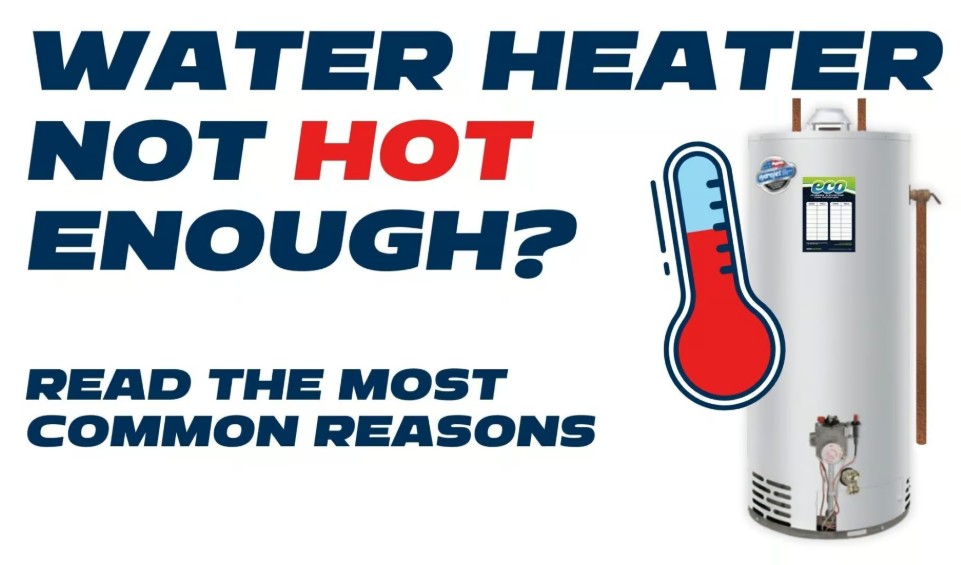
5 Common Reasons Your Water Heater Isn’t Staying Hot
Before assuming you need a replacement, it’s important to understand what’s actually causing the lack of hot water. In many cases, the issue isn’t catastrophic, but it can signal a system that’s reaching the end of its useful life.1. Incorrect Thermostat Settings
Sometimes the problem is as simple as a thermostat that’s set too low. Most water heaters are factory-set around 120ºF, which is safe and energy-efficient. If someone has adjusted it downward, or if it was never set properly, your water may feel underwhelming, especially during colder months. That said, constantly raising the thermostat isn’t a long-term fix. If your water heater struggles to maintain temperature even after adjustment, something else is likely going on.2. Sediment Buildup Inside the Tank
Over time, minerals from hard water settle at the bottom of the tank-style water heaters. This sediment acts as insulation between the burner or heating element and the water, making it harder to heat effectively. The result? Slower recovery times, less available hot water, and higher energy bills. If your water heater is more than 5-7 years old and hasn’t been flushed regularly, sediment buildup is a very common culprit.3. The Tank Is Too Small for Your Household
Your hot water needs may have outgrown your system. A tank water heater holds a fixed amount of hot water, typically 40-80 gallons. If multiple showers, appliances, or fixtures are running close together, you’ll drain that supply faster than it can recover. Signs your tank may be undersized:- Hot water runs out consistently
- Recovery takes longer than it used to
- The problem worsened after adding household members or appliances
4. Aging or Failing Heating Components
Water heaters don’t last forever. Electric units rely on heating elements that weaken over time. Gas units depend on burners and gas valves that can degrade. As components wear out, the system may still run, but not efficiently enough to meet demand. Most tank water heaters last 8-12 years. After that, performance issues are often a sign that replacement should be part of the conversation.5. Plumbing or Fixture Issues (Less Common, But Possible)
Sometimes the water heater isn’t the real problem at all. Issues like long pipe runs, poor insulation, and mixing valve malfunctions can cause heat loss before hot water ever reaches your faucet. A professional assessment is often needed to rule these out.What Is a Tankless Water Heater and How Is It Different?
When it comes to how water heaters deliver hot water, tankless systems work in a completely different way than traditional tank-style heaters, and that difference can make a big impact on performance and efficiency. A tankless water heater doesn’t store hot water at all. Instead, it heats water on demand, only when you open a hot water faucet or start an appliance that uses hot water. Here’s how it works.- Cold water flows into the tankless unit when you turn on a hot water tap
- Inside the unit, powerful burners or electric heating elements rapidly heat that water as it passes through a heat exchanger
- The hot water then continues out of the heater and to your faucet or shower, with no stored tank of preheated water
Could a Tankless Water Heater Fix the “Not Hot Long Enough” Problem?
Because tankless systems don’t rely on stored water, you won’t “run out” of hot water the same way you do with a tank. As long as the unit is properly sized and you stay within its flow rate limits, you’ll get continuous hot water, even during back-to-back showers. Tankless units are designed to deliver steady output temperatures, which means fewer fluctuations during use. If your main frustration is inconsistent or fading heat, this can be a major improvement. Tankless systems don’t waste energy reheating stored water. That efficiency often translates to faster heating, better performance during peak demand, and lower standby energy losses. However, performance depends heavily on correct sizing and installation.When a Tankless Water Heater Won’t Solve the Problem
Tankless water heaters aren’t a one-size-fits-all solution. While they provide continuous hot water, they’re limited by flow rate, not storage. If your household regularly runs multiple showers or appliances at the same time, an improperly sized tankless system can struggle to keep up, leading to temperature drops or reduced pressure during peak use. Performance also depends heavily on proper sizing and local conditions. Homes in colder climates need systems capable of handling a larger temperature rise, and older homes may require gas line, electrical, or venting upgrades. Without the right infrastructure, even a high-quality tankless unit can underperform. Finally, a tankless water heater won’t fix problems that aren’t caused by the heater itself. Long pipe runs, poor insulation, or plumbing layout issues can all reduce hot water delivery. In those cases, upgrading equipment alone won’t solve the issue, which is why evaluating your home and usage matters more than choosing a product.How to Decide What’s Right for Your Home
Before deciding whether to repair, replace, or upgrade your water heater, take a step back and ask yourself a few practical questions:- How old is my current water heater? Systems nearing the end of their lifespan often struggle to perform consistently, even if they’re still technically “working.”
- Are my hot water needs increasing or staying the same? A growing family, added bathrooms, or new appliances can quickly outpace an older or undersized system.
- Do I regularly run out of hot water? This is often the clearest sign that your current setup no longer matches your daily usage.
- Am I planning to stay in this home long-term? Long-term plans may justify investing in a more efficient, higher-performance system, while short-term plans may not.
What’s The Next Step?
If your water heater isn’t hot enough, the cause could be anything from sediment buildup to an undersized or aging system, not necessarily a total failure. You came here because inconsistent or insufficient hot water is disrupting your daily life, and you want a solution that actually works. Now that you understand why this happens and how tankless systems compare, your next step is to evaluate whether your current system can be repaired, resized, or if an upgrade makes sense. At Eco Plumbers, Electricians, and HVAC Technicians, we believe informed homeowners make better decisions, especially when it comes to major systems like water heaters. If you want to go deeper, your next best read is Tankless vs. Traditional Water Heaters: Which Should You Choose, where we break down the numbers, pros, cons, and real-world scenarios to help you choose with confidence.FAQs
Can weather or seasonal changes affect how my hot water feels?
Yes, seasonal temperature changes can make hot water feel less effective, even if your water heater hasn’t changed. In colder months, the incoming groundwater temperature drops, meaning your water heater has to work harder to raise it to the same set temperature. This can result in slower recovery times, reduced hot water supply, or lukewarm water during peak use, especially with older or undersized systems.
How long should I wait before the hot water reaches my faucet?
The time it takes for hot water to reach your faucet depends more on your plumbing layout than the water heater itself. Long pipe runs, poor insulation, and distance from the heater can all cause delays and heat loss. Even a properly functioning tank or tankless system can feel inadequate if hot water cools down before reaching the fixture. In some cases, solutions like pipe insulation or recirculation systems may be more effective than replacing the heater.
Is inconsistent hot water a safety issue or just an inconvenience?
Inconsistent hot water is usually an inconvenience, but it can become a safety concern if temperature fluctuations are severe. Sudden drops or spikes in water temperature can increase the risk of scalding, especially for children or older adults. These fluctuations may point to failing components, thermostat issues, or plumbing problems that should be evaluated by a professional to ensure safe and reliable operation.