

If your HVAC system has been acting up lately, you are probably asking yourself an uncomfortable question.
Should I repair it, or is it finally time to replace it after many repairs?
Maybe your air conditioner struggles to keep the house cool, your furnace is making strange noises, or your energy bills keep climbing. Each repair might seem manageable at first, but eventually, you start wondering if you are putting money into a system that is nearing the end of its life.
After helping Ohio homeowners navigate HVAC decisions for years, we have seen this situation many times. There is no one-size-fits-all answer, but there are clear factors that help determine which option will save you more money long term.
In this article, you will learn:
- When repairing your HVAC system is the smarter financial move
- When replacing your system may actually save you more money
- The hidden costs homeowners often overlook
- A simple rule of thumb that professionals use to decide
By the end, you will have a clear framework to determine whether replacing or repairing your HVAC system makes the most financial sense for your home.
The Quick Rule of Thumb for Deciding Between HVAC Repair and Replacement
If you’re looking for a quick way to evaluate whether repair or replacement makes more financial sense, many HVAC professionals use what’s called the $5,000 rule.
The rule is simple: multiply the cost of the repair by the age of your HVAC system. If the number exceeds $5,000, replacement is often the smarter long-term investment. Here’s an example.
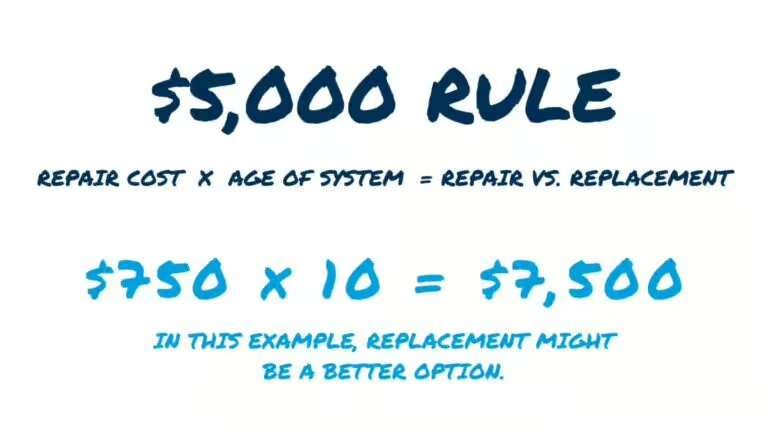
Because the result is over $5,000, replacing the system may make more financial sense than repairing it. This rule helps homeowners quickly determine whether they might be investing money into a system that’s already nearing the end of its lifespan.
That said, the $5,000 rule is only a starting point. Other factors like energy efficiency, repair frequency, and overall system condition can also influence whether repairing or replacing your HVAC system will save you more money in the long run.
When Repairing Your HVAC System Makes More Financial Sense Than Replacement
In many situations, repairing your HVAC system is the most cost-effective choice, especially if the unit still has several productive years left.
While replacement can sometimes save money long-term, repairs are often the smarter financial decision when the issue is minor and the system is still relatively young. Below are three situations where repairing your HVAC system typically makes more sense.
Your System Is Less Than 8-10 Years Old
Most HVAC systems last 15–20 years with proper maintenance, which means a newer system usually still has plenty of life remaining. If your system is under 10 years old, repairing it is typically far less expensive than installing a brand new system.
Here’s a general guideline many HVAC professionals follow.
Repair vs. Replacing Timeline
| System Age | Typical Recommendation |
0–8 years | Repair |
8–12 years | Evaluate repair cost |
| 12–20 years | Replacement often makes sense |
The younger the system, the more likely a repair will be the most financially responsible choice.
The Repair Is Minor
Not all HVAC issues require a major repair. In fact, many common problems are relatively simple and affordable to fix.
Issues such as replacing a capacitor, fixing a thermostat, replacing a contactor, cleaning dirty coils, or replacing sensors are typically straightforward repairs for a technician. Minor HVAC repairs often cost only a few hundred dollars and can restore your system’s performance without requiring a major financial investment.
When the issue is small, and the rest of the system is still functioning well, repairing the unit is usually the most logical and cost-effective option.
Your Energy Bills Are Still Reasonable
One of the biggest warning signs of an aging HVAC system is steadily rising energy costs. As systems lose efficiency over time, they often have to run longer and work harder to maintain the same indoor temperature, which can cause utility bills to climb.
However, if your energy bills have remained relatively stable and your home still feels comfortable throughout the year, your HVAC system is likely still operating efficiently. In these cases, repairing the system instead of replacing it may continue to be the most cost-effective choice.
When Replacing Your HVAC System Saves More Money
While repairs can extend the life of a system, there comes a point when repairing becomes more expensive than replacing it.
As systems age, they typically become less efficient, require more frequent repairs, and struggle to keep up with your home’s heating and cooling needs. When this happens, investing in a new system can often save you more money over time.
Below are some of the most common situations where replacing your HVAC system may be the smarter financial decision.
Your HVAC System Is Over 12-15 Years Old
Most HVAC systems begin to show significant wear after about 12-15 years of use, even when they’ve been properly maintained. As systems age, they typically lose efficiency, experience more frequent breakdowns, and rely on older technology that is less effective than modern equipment.
Repairs also tend to become more expensive as components wear out and parts become harder to find. When your HVAC system reaches this stage, replacing it can often prevent a cycle of ongoing repair costs while improving reliability and efficiency.
You’re Facing Major Component Failure
Some HVAC repairs are much more expensive because they involve critical system components. Issues such as compressor failure, cracked heat exchangers, evaporator coil replacement, or blower motor replacement can require extensive labor and costly parts.
Depending on the system, these repairs can range from $1,500 to $4,000 or more. When a repair begins to approach 40-50% of the cost of installing a new system, replacing the unit is often the more financially responsible decision.
Your Energy Bills Continue to Increase
Another common sign that replacement may be the better option is steadily rising energy bills. Older HVAC systems are significantly less efficient than modern systems, which means they must work harder and run longer to heat or cool your home.
For example, many older air conditioners operate with SEER ratings between 8 and 10, while newer systems often have SEER ratings of 16-20 or higher.
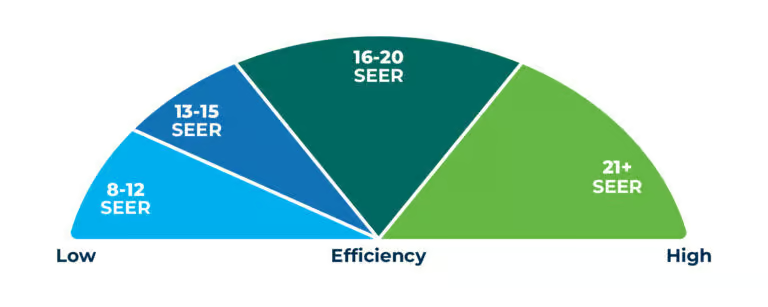
This difference in efficiency can reduce cooling costs by 20-40% or more in some homes. If your energy bills have continued to climb despite regular maintenance, replacing your HVAC system may lower your monthly utility costs and improve overall performance.
Hidden HVAC Repair Costs Homeowners Often Overlook
Many homeowners only focus on the immediate cost of repairing versus replacing their HVAC system, but that comparison doesn’t always reveal the full financial picture. Several hidden factors can significantly affect how much you’ll actually spend over time.
Here are three commonly overlooked costs that can make replacement the smarter long-term decision.
Frequent Repairs
If you’re calling an HVAC technician every year, those costs add up quickly.
For example, a $400 repair each year over five years adds up to $2,000. And that doesn’t include the inconvenience of repeated breakdowns or the possibility of larger repairs in the future.
Frequent repairs are often one of the strongest indicators that replacing your HVAC system may ultimately save you money. Instead of continuing to invest in an aging system, that money could be put toward a newer, more reliable unit.
Comfort Problems
As HVAC systems age, they often struggle to maintain consistent temperatures throughout the home. You may start to notice uneven cooling or heating, rooms that feel significantly warmer or colder than others, or systems that seem to run constantly without reaching the desired temperature.
While these issues aren’t always expensive to fix on their own, they can signal that your HVAC system is losing performance and nearing the end of its lifespan. In many cases, replacing the system can restore comfort while improving efficiency.
Refrigerant Phaseouts
Many older air conditioners still rely on R-22 refrigerant, which has been phased out due to environmental regulations. Because it is no longer produced, the remaining supply has become increasingly scarce and expensive.
As a result, repairs involving R-22 can cost significantly more than homeowners expect. When an older system requires refrigerant-related repairs, replacing the unit with a modern system that uses current refrigerants is often the more practical and cost-effective solution.
Comparing the Long-Term Costs: Repair vs. Replacement
To better understand the financial difference between repairing and replacing your HVAC system, it helps to compare the long-term impact of each option.
While repairs typically involve a lower upfront cost, replacement often provides benefits that can reduce costs over time.
Repair vs. Replacement: Factors to Consider
| Factor | Repair | Replacement |
| Upfront Cost | Lower initial expense | Higher upfront investment |
| Energy Efficiency | Usually stays the same or declines | Significantly improved efficiency |
| Reliability | Breakdowns may continue as the system ages | Much more reliable with new components |
| Warranty | Often limited or expired | New manufacturer warranty coverage |
| Long-Term Cost | Can add up through repeated repairs | Often lower overall over the lifespan of the system |
While replacing your HVAC system requires a larger upfront investment, it can often become the more affordable option over time, particularly if your current system is older, inefficient, or frequently breaking down.
By weighing both the immediate costs and the long-term benefits, you can make more informed decisions about which option makes the most financial sense for your home.
5 Questions to Ask Yourself When Deciding to Repair or Replace Your HVAC System
If you’re unsure which option is best, ask yourself these questions:
1. How old is my HVAC system?
Systems approaching or exceeding 12-15 years old are often closer to the end of their lifespan.
2. How expensive is the repair?
Higher repair costs may signal that replacement is becoming a more practical investment.
3. How often does the system break down?
Frequent service calls can quickly add up and may indicate a system that is wearing out.
4. Are my energy bills increasing?
Rising utility costs may suggest your HVAC system is losing efficiency.
5. Does my home feel uncomfortable year-round?
Uneven temperatures, poor airflow, or constant running cycles can indicate declining performance.
If you find yourself answering “yes” to several of these questions or realizing your system is old and breaking down often, replacing your HVAC system may ultimately be the more cost-effective decision.
Should You Repair or Replace Your HVAC System?
At the end of the day, deciding whether to repair or replace your HVAC system comes down to understanding the true long-term cost of keeping your current system running. As you’ve seen, repairs often make sense when your system is newer, the issue is minor, and your energy bills remain stable. However, when your system is older, breaking down frequently, or causing rising energy costs, replacement may ultimately save you more money over time.
If you started reading this article because your HVAC system has been struggling, you’re likely trying to avoid wasting money on the wrong decision. Now you have a clearer framework to evaluate your situation, from using the $5,000 rule to considering system age, repair frequency, and energy efficiency.
Your next step is to have your HVAC system professionally evaluated so you can understand the true condition of your equipment and the cost of your options. A qualified technician can help you determine whether a repair will extend the life of your system or if replacement is the smarter long-term investment.
If you’re located in the greater Columbus, Dayton, Cincinnati, or Chillicothe, OH areas, and a replacement is something you’re already considering, read our guide “Cost of HVAC Installation with Eco” to learn more about what you can expect from us.
At Eco Plumbers, Electricians, and HVAC Technicians, we help Ohio homeowners make confident decisions about their heating and cooling systems every day. Whether you need an honest repair assessment or want to use our free cost estimator tool for a replacement, our goal is to help you find the most cost-effective solution for your home and comfort.