


If a pipe suddenly bursts in your home or a leak starts spreading faster than you can contain it, do you know what to do, or would you be stuck watching water damage spread across your floors, walls, and belongings? In these moments, every second counts, and not knowing how to stop the water can quickly turn a small issue into a costly disaster.
At Eco Plumbers, Electricians, and HVAC technicians, we have responded to hundreds of emergency plumbing calls where homeowners needed to act fast to prevent serious damage. One thing we see time and time again is that homeowners who know how to shut off their water immediately save themselves thousands in repairs and hours of stress.
In this guide, you will learn:
- Where to find your main water shut-off valve
- How to turn it off properly
- What to do immediately after shutting off the water
What Is a Main Water Shut-Off Valve?
Your main water shut-off valve is what controls whether water is flowing into your home or not. When it is open, water moves freely through your pipes. When it is closed, everything stops.
This is the valve you rely on when something goes wrong. Whether a pipe bursts, a leak gets out of control, or an appliance like your water heater starts failing, this is the fastest way to protect your home from further damage. It is also what you will use any time you need to safely make plumbing repairs or upgrades.
The problem is, most homeowners do not think about this valve until they actually need it. And in an emergency, that delay can mean more water, more damage, and more expensive repairs.
If you are not exactly sure where your shut-off valve is or how to use it, you are not alone. But it is one of those small things that makes a big difference, especially when time is working against you.
Where Is the Main Water Shut-Off Valve Located?
The exact location of your shut-off valve depends on how your home gets its water. In most cases, it will be in a predictable spot, but if you have never looked for it before, it can take a little searching.
If You’re on City Water
If your home is connected to city water, your main shut-off valve is usually located on the front side of your home, close to where the main water line enters. You will typically find it in one of the following places:
- In the basement, along the front wall
- Inside a crawl space
- Near the point where the water line comes into your home
In some cases, there is also a municipal shut-off valve near the street. However, this is not the one you want to rely on in an emergency, since accessing it often requires special tools or permission. Your focus should be on the valve inside your home.
If You’re on a Well System
If your home uses a well, the location of the shut-off valve can vary more depending on how your system is set up. That said, there are still a couple of common places to check:
- Near the well pressure tank
- Where the main water line enters your home
Because well systems are not standardized, this is something you should locate ahead of time rather than trying to figure out during an emergency. A few minutes spent finding it now can save you a lot of stress when time matters most.
How to Shut Off the Water to Your House
Once you’ve found your main shut-off valve, the process itself is simple. The key is knowing exactly what to look for and acting quickly.
Step 1: Identify the Valve Position
First, take a look at how the valve is positioned.
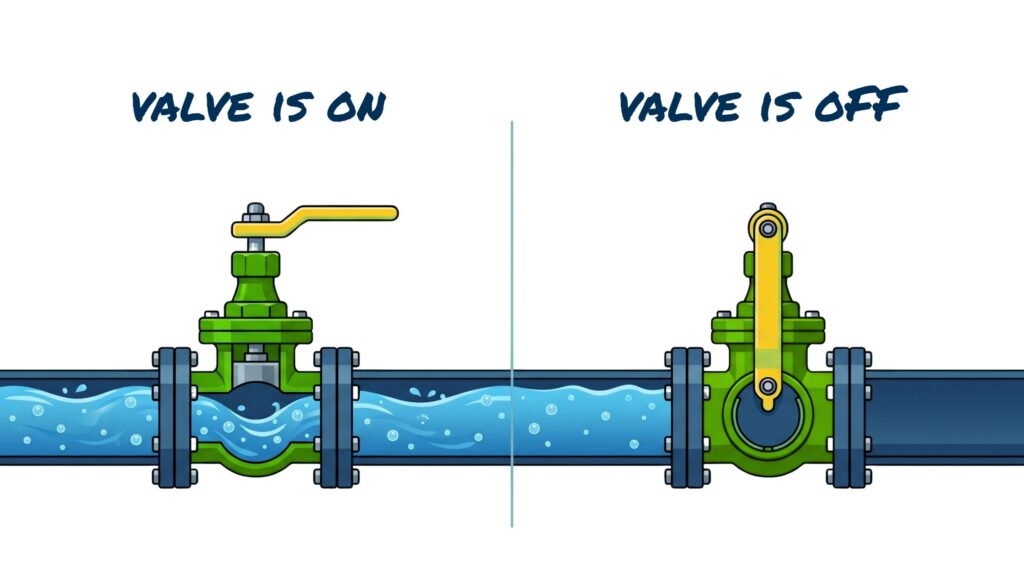
If the handle is parallel, or in line, with the pipe, the water is on. This is the normal operating position, so do not be alarmed if this is how you find it.
Step 2: Turn the Valve Clockwise
To shut off the water, you will need to turn the valve.
Turn the valve clockwise until it stops.
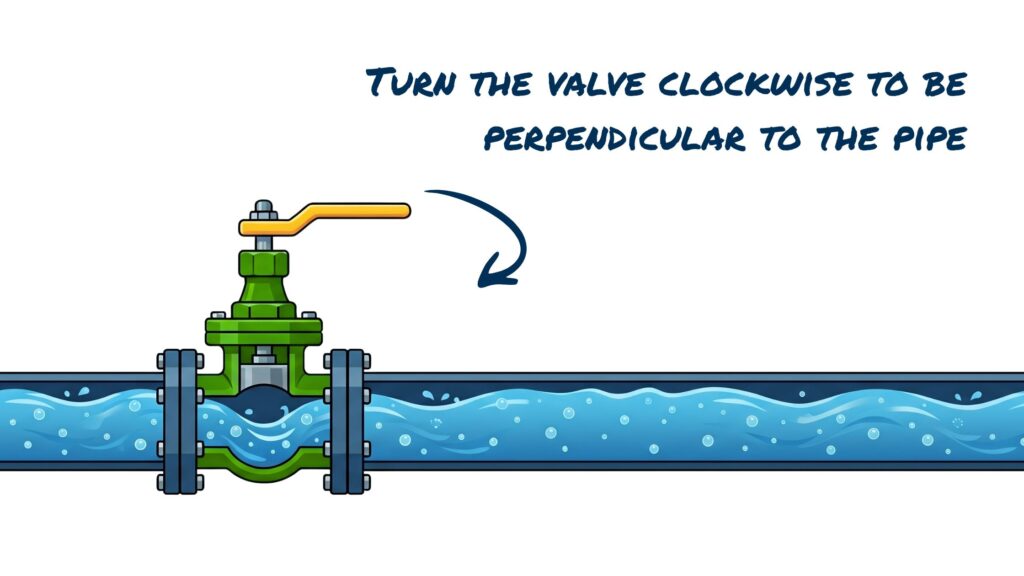
As you do this, you are closing the valve and stopping water from entering your home. Once it is fully turned, no new water will flow through your plumbing system.
Step 3: Confirm the Water Is Off
After turning the valve, it is important to double-check that the water is actually off.
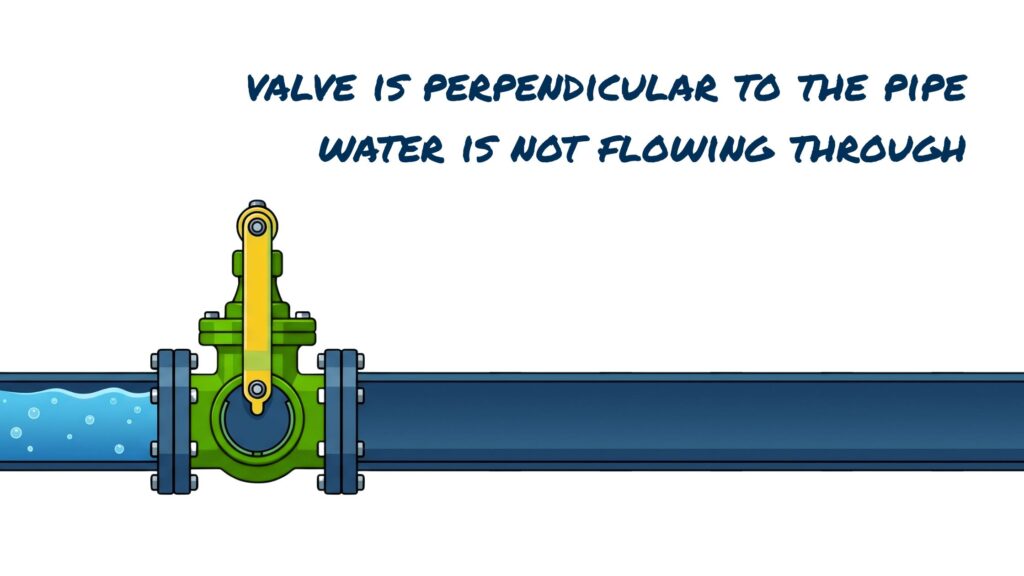
Go to a nearby faucet and turn it on. If everything is working correctly, the water should slow down and then stop completely.
If water continues to run, the valve may not be fully closed, or it could be faulty. In that case, you may need to try turning it further or contact a professional for help.
Important: Turning off your main water valve does not immediately stop a leak. This is something many homeowners do not realize until they are in the middle of an emergency. Even after the valve is shut off, there is still pressurized water sitting inside your pipes, which means water can continue to flow for a short period of time.
How to Depressurize Your Plumbing System
To fully stop water flow and minimize damage, you need to release the pressure still sitting inside your pipes. This is what actually slows or stops the leak after the main valve is turned off.
Step 1: Open a Faucet at the Highest Point
Start by turning on a faucet at the highest point in your home. In a multi-story house, this would be an upstairs faucet. If you live in a single-level home, just choose the faucet that sits highest relative to the rest of your plumbing, such as a sink or shower. This allows air into the system, which helps break the pressure inside the pipes.
Step 2: Open a Faucet at the Lowest Point
Next, open a faucet at the lowest point in your home. In many cases, this may be a basement sink or a first-floor fixture. If your home is single-level, use a faucet that sits lowest in relation to your plumbing, or even an outdoor spigot if you have one. This gives the water somewhere to drain out, helping clear the remaining water from your pipes.
Step 3: Let the System Fully Drain
Give it a minute and let the water run until it slows down and stops.
Once the flow stops, your plumbing system is depressurized. At this point, any active leaking should slow significantly or stop altogether, and you have done everything you can to prevent further water damage until repairs are made.
When Should You Shut Off Your Water?
Knowing when to shut off your water is just as important as knowing how. The key difference comes down to whether you are reacting to a problem or preventing one.
| Emergency Situations | Non-Emergency Situations |
| Burst or frozen pipe | Plumbing repairs or upgrades |
| Major leak you cannot control | Installing new fixtures |
| Water heater failure when it’s leaking | Leaving your home for an extended period |
| Overflowing fixtures or appliances | Preventative maintenance or inspections |
If you are dealing with an emergency, shutting off your water immediately can significantly reduce damage and repair costs. In non-emergency situations, it is a proactive step that helps you avoid problems altogether.
What to Do After You Shut Off the Water
Once you’ve successfully shut off and depressurized your system, your next step is critical.
Call a Professional
Stopping the water is only the first step. The underlying problem still needs to be identified and fixed properly. Otherwise, the issue can come back or even get worse once the water is turned back on.
A licensed plumber will be able to identify the source of the problem, repair or replace any damaged components, and make sure your system is safe before restoring water to your home.
If you’re not sure what to do next, this is exactly where our team at Eco Plumbers, Electricians, and HVAC technicians can help. We handle situations like this every day, and we can quickly diagnose the issue, walk you through your options, and get your home back to normal as safely as possible.
As Nate from our team puts it, “In the meantime, go ahead and call a professional… I might know a guy.”
Be Prepared Before You Need It
At the end of the day, knowing how to shut off your water is one of the simplest ways to protect your home when something goes wrong. You now know how to find your shut-off valve, turn it off quickly, and depressurize your system so you can limit damage as much as possible.
If you think back to why you started reading, it likely comes down to one concern. What happens if water starts leaking and you cannot stop it fast enough? Without a plan, that situation can quickly lead to stress, damage, and expensive repairs. But now, you are in a position to act immediately and take control before things escalate.
Your next step is simple. Take a few minutes today to locate your main shut-off valve and make sure you can access it easily. That small step alone can make a major difference when time matters most.
And if you ever find yourself in a situation where something goes wrong, and you are not sure what to do next, our team at Eco Plumbers, Electricians, and HVAC technicians is here to help.