

What's Ahead
If you’re reading this, there’s a good chance you’ve either scheduled or are about to schedule a water heater appointment with us. And if that’s the case, you’re probably already wondering what happens next.
Maybe you’ve been dealing with inconsistent hot water, rising energy bills, or worse, no hot water at all. Now you’re taking the next step toward fixing the problem, but a new kind of uncertainty has probably crept in.
At Eco Plumbers, Electricians, and HVAC Technicians, we’ve helped thousands of homeowners through this exact process, and we know that not knowing what to expect can make the experience feel more complicated than it needs to be.
The reality is, your water heater appointment should be simple, informative, and tailored to your needs when it’s done right.
In this article, we’ll walk you through exactly what to expect during your water heater appointment, including the key steps, who you’ll meet, what decisions you’ll make, and how to prepare so you can get the most out of your time.
Why the Water Heater Appointment Matters More Than You Think
A water heater appointment is more than just a quick service visit. It is a thorough evaluation of your home, your hot water usage, and your long-term needs.
During the appointment, your technician will assess your current system, identify any existing issues, and help determine whether a repair or full replacement makes the most sense. If a new unit is needed, they will also evaluate installation logistics to ensure everything can be completed safely and efficiently.
This process is what ensures your system is properly sized, energy efficient, and reliable for your household. When done correctly, it helps prevent future headaches and unnecessary costs. However, if this step is rushed or overlooked, it can lead to problems like a system that cannot keep up with your hot water demand, higher energy bills due to inefficiency, or unexpected complications and costs during installation.
Step 1: Initial Conversation About Your Needs
Your appointment will begin with a conversation, often at your kitchen table or near your current water heater. This is where your technician focuses on understanding your specific situation before making any recommendations. They may ask questions like:
Your appointment will begin with a conversation, often at your kitchen table or near your current water heater. This is where your technician focuses on understanding your specific situation before making any recommendations. They may ask questions like:
- Have you been running out of hot water?
- How old is your current water heater?
- Have you noticed leaks, noises, or discoloration?
- How many people live in your home?
- Are you interested in improving your home’s energy efficiency?
What you share during this conversation directly impacts the recommendation you receive. The goal is to match you with a solution that fits your household, not a one-size-fits-all option.
For example, a large family with high hot water demand will need a very different system than a single homeowner with more moderate usage.
Step 2: System Inspection and Home Assessment
Next, your technician will inspect your current water heater and the surrounding area. This step is focused on making sure everything is safe, functional, and up to code before any recommendations are made. During the inspection, they will evaluate:
- The age and overall condition of your current unit
- Tank size and capacity
- Signs of corrosion, leaks, or general wear
- Venting and exhaust systems for gas units
- Electrical or gas connections
- Space and clearance requirements
This is often where hidden issues are uncovered, and that is a good thing. Identifying problems early allows you to address them before they turn into more serious or costly repairs.
For example, your technician may find a failing tank that could rupture, improper venting that creates safety risks, or code violations that need to be corrected. Catching these issues early helps you avoid bigger problems and unexpected expenses down the line.
Step 3: Determining Repair vs. Replacement
One of the most important parts of your appointment is deciding whether your water heater should be repaired or replaced. Your technician will guide you through this decision by looking at several key factors, including the age of your unit, which is typically around 8 to 12 years for standard tank systems, the cost of repairing the current system compared to replacing it, the overall energy efficiency, and how often you have experienced issues in the past.
Step 4: Water Heater Options and Recommendations
If replacement is recommended, your technician will walk you through the options that best fit your home and usage. This is where the appointment naturally shifts into decision-making, as you begin comparing different systems based on performance, efficiency, and long-term value. You may review:
- Tank vs. tankless water heaters (check out our blog on this topic!)
- Different tank sizes based on your household’s needs
- Energy-efficient models
- Gas vs. electric systems
- Warranty coverage and expected lifespan
By the end of this conversation, you should have a clear understanding of the pros and cons of each option and how they align with your goals. The goal is not to pressure you into a decision, but to give you the clarity and confidence to choose the solution that makes the most sense for your home.
Step 5: Transparent Pricing and Quote Review
Once your options are clearly defined, you will receive a quote that will include:
- Equipment cost
- Labor and installation
- Any required upgrades, such as venting or electrical work
- Permits and inspections
- Maintenance recommendations
This is your opportunity to review everything carefully and make sure there are no surprises. A good technician will walk you through the details and answer any questions you have so you feel confident in your decision.
As you review your quote, be sure to ask:
- What could cause this price to change?
- Are there financing options available?
- What is included versus not included?
- How does this option compare to the others we discussed?
Taking the time to fully understand your quote now helps prevent confusion or unexpected costs later in the process.
Step 6: What Happens If You Move Forward
If you decide to move forward, your technician will clearly walk you through what happens next so you know exactly what to expect. This typically includes scheduling your installation, ordering the necessary equipment, preparing your home for the work, completing any required permits, and finishing with a final system test and walkthrough once everything is installed.
Most water heater installations can be completed within a single day, although the exact timeline may vary depending on the time of your appointment and equipment availability. Having clear expectations at this stage helps prevent surprises and keeps the entire process smooth and predictable from start to finish.
How to Prepare for Your Water Heater Appointment
To get the most out of your appointment, a little preparation goes a long way. Before your visit, take some time to think about the hot water issues you’ve been experiencing, whether that’s running out of hot water, inconsistent temperatures, or anything unusual.
It’s also helpful to know the age of your current system if you can, have a general idea of your budget range, and make sure your water heater is easily accessible for the technician.
Make Your List
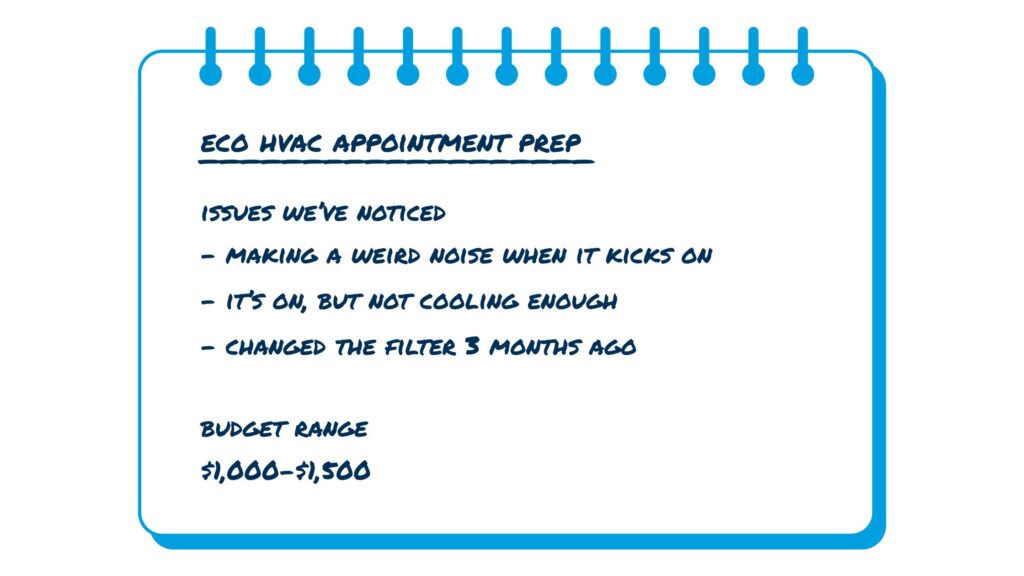
There are a few additional steps that aren’t required but can still be helpful. Having recent utility bills on hand can give insight into your energy usage, and noting any unusual system behavior ahead of time can help your technician identify potential issues more quickly. The more information you can provide, the more accurate and helpful your recommendations will be.
What Comes Next After Your Appointment?
At the end of the day, most homeowners schedule a water heater appointment after dealing with frustration, whether it is inconsistent hot water, rising energy bills, or the inconvenience of a system that is no longer reliable. You came into this process looking for clarity on what to expect and how to make the right decision.
Now, you have a clear understanding of how the appointment works, from the initial conversation and inspection to deciding between repair and replacement, reviewing your options, and understanding pricing. You are no longer guessing what will happen or wondering if you are making the right call.
If you are starting to think about replacement, your next step is to understand what it may cost for your specific home. The best way to do that is by using our water heater replacement cost estimator, which gives you a realistic range based on your needs and setup. This is a great place to start, and then one of our technicians can come out and provide you with more information and ensure your quote is accurate for your home.
At Eco Plumbers, Electricians, and HVAC Technicians, we are here to make this process straightforward, transparent, and tailored to you. Whether you are repairing your current system or planning for a replacement, our goal is to help you make a confident, informed decision that works for your home long term.
FAQs
How long does a water heater replacement usually take?
Most water heater appointments take between 60 and 90 minutes, depending on the complexity of your system and whether you’re exploring replacement options. If additional issues are discovered during the inspection, it may take a bit longer to fully assess everything and provide accurate recommendations.
Do I need to replace my water heater before it completely fails?
Not necessarily. Waiting until failure can lead to more damage and urgency. If your unit is nearing the end of its lifespan or showing signs of wear, replacing it proactively can help you avoid unexpected leaks, water damage, and emergency installation costs.
Will I have hot water the same day if I replace my water heater?
In most cases, yes. If you move forward with a standard replacement and the installation is straightforward, your new water heater can often be installed the same day or within a very short timeframe. However, more complex installations or required upgrades may extend the timeline slightly, like if you’re going tankless versus a traditional water heater.