


Is your home feeling stuffy in the summer or unevenly heated in the winter?
Are your energy bills creeping up, making you wonder if your ceiling fan might actually be part of the problem?
Many homeowners don’t realize that the wrong size fan, or an outdated one, can cause poor airflow, noisy operation, and rooms that never feel quite comfortable enough. The good news is that choosing the right ceiling fan can dramatically improve your comfort and efficiency.
At Eco Plumbers, Electricians, and HVAC Technicians, we’ve helped homeowners upgrade their lighting and ventilation systems for years. In this guide, you’ll discover the best ceiling fans for homeowners in 2026, what makes a fan truly worth buying, and the pros and cons of each option, who each model is best for, and what you can realistically expect to pay, so you can move forward with confidence.
 Best For: Homeowners who want strong performance and smart features without overspending.
Typical Cost: $200-$300+ without installation
The Hunter Aerodyne remains a top pick in 2026 thanks to its balance of airflow, quiet operation, and built-in smart technology. With Wi-Fi connectivity and compatibility with Alexa and Google Assistant, it integrates easily into most smart homes while maintaining a clean, modern look.
If you want a reliable, smart ceiling fan without overspending, the Hunter Aerodyne is a strong overall choice.
Best For: Homeowners who want strong performance and smart features without overspending.
Typical Cost: $200-$300+ without installation
The Hunter Aerodyne remains a top pick in 2026 thanks to its balance of airflow, quiet operation, and built-in smart technology. With Wi-Fi connectivity and compatibility with Alexa and Google Assistant, it integrates easily into most smart homes while maintaining a clean, modern look.
If you want a reliable, smart ceiling fan without overspending, the Hunter Aerodyne is a strong overall choice.
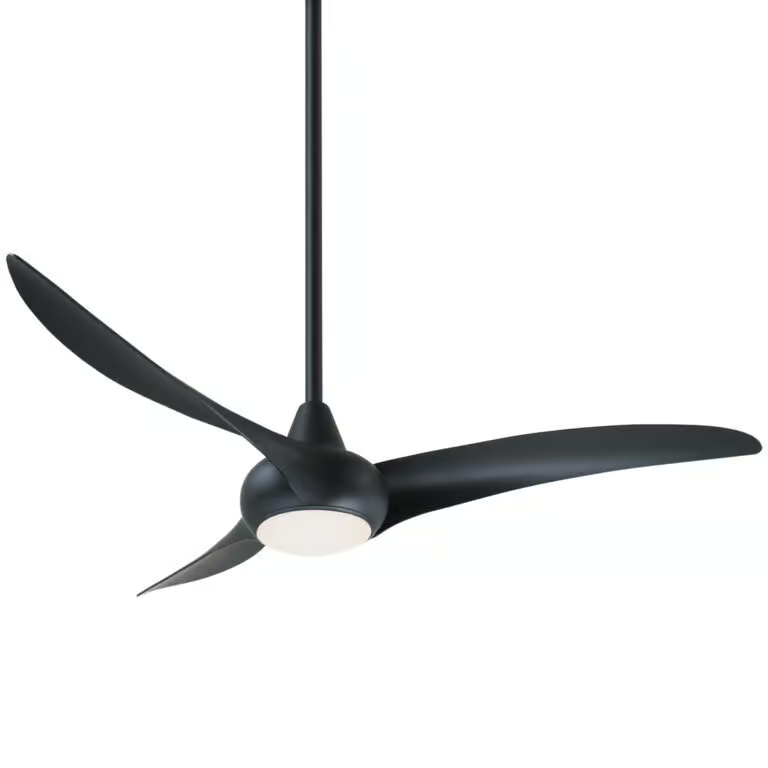 Best For: Design-conscious homeowners who want a statement piece.
Typical Cost: $400+ without installation
The Minka-Aire Light Wave is especially popular in contemporary and modern homes thanks to its sleek, sculptural blade design. It’s a fan that doubles as a design feature, making it ideal for homeowners who care just as much about aesthetics as performance. Beyond its appearance, it includes an energy-efficient DC motor and an integrated LED light, offering quiet and efficient operation.
If visual appeal is a top priority and you want a fan that complements a modern space, the Light Wave is a strong contender.
Best For: Design-conscious homeowners who want a statement piece.
Typical Cost: $400+ without installation
The Minka-Aire Light Wave is especially popular in contemporary and modern homes thanks to its sleek, sculptural blade design. It’s a fan that doubles as a design feature, making it ideal for homeowners who care just as much about aesthetics as performance. Beyond its appearance, it includes an energy-efficient DC motor and an integrated LED light, offering quiet and efficient operation.
If visual appeal is a top priority and you want a fan that complements a modern space, the Light Wave is a strong contender.
 Best For: Homeowners who want top-tier performance, automation, and cutting-edge technology.
Typical Cost: $850-$1,200+ without installation
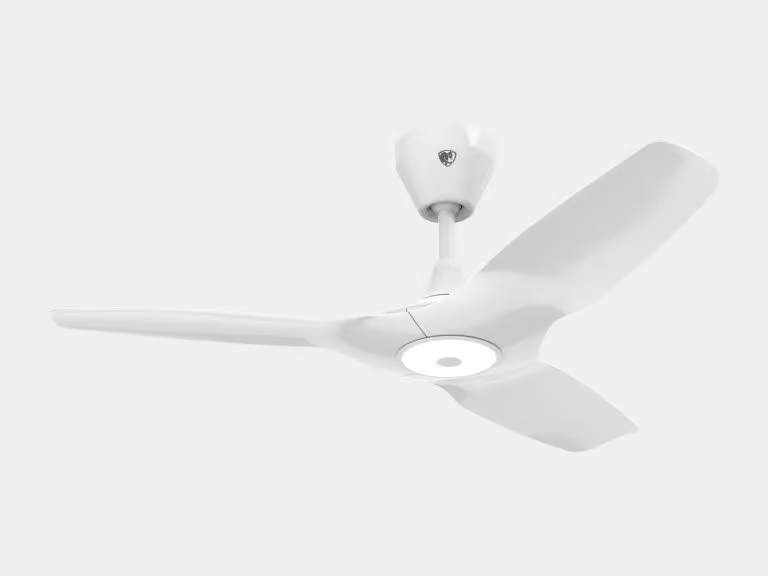
Haiku fans are widely considered the gold standard in residential ceiling fans, and for good reason. The Haiku L Smart Ceiling Fan combines advanced automation with exceptional airflow and energy efficiency. It’s designed for homeowners who want a high-performance system that essentially runs itself.
If you want the smartest, most advanced ceiling fan available in 2026 and you’re willing to invest in premium performance, this is the option for you.
Best For: Homeowners who want top-tier performance, automation, and cutting-edge technology.
Typical Cost: $850-$1,200+ without installation
Haiku fans are widely considered the gold standard in residential ceiling fans, and for good reason. The Haiku L Smart Ceiling Fan combines advanced automation with exceptional airflow and energy efficiency. It’s designed for homeowners who want a high-performance system that essentially runs itself.
If you want the smartest, most advanced ceiling fan available in 2026 and you’re willing to invest in premium performance, this is the option for you.
 Best For: Budget-conscious homeowners who need a simple, functional replacement
Typical Cost: $140+ without installation
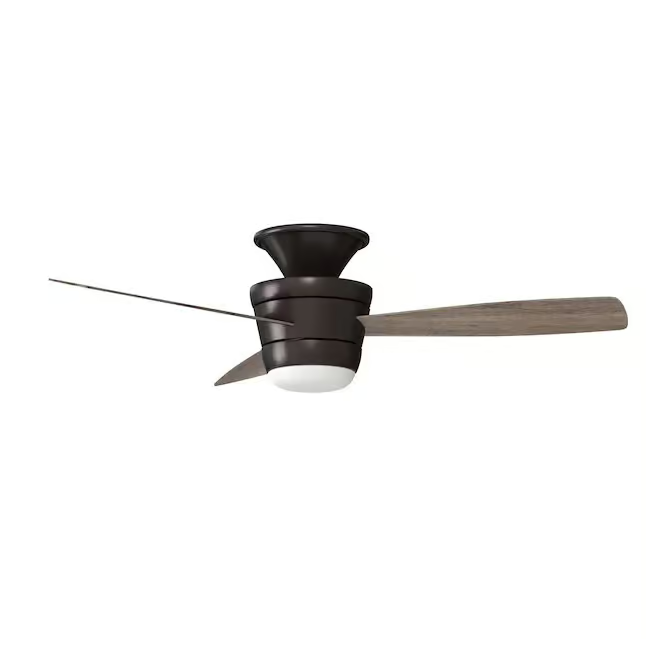
The Harbor Breeze Mazon is a solid entry-level ceiling fan for smaller spaces. It’s compact, affordable, and practical, making it a popular choice for bedrooms, apartments, or rooms where you simply need basic airflow without premium features.
If you’re replacing a basic fan and want a cost-effective solution without investing in advanced technology, the Harbor Breeze Mazon is a dependable budget option.
Best For: Budget-conscious homeowners who need a simple, functional replacement
Typical Cost: $140+ without installation
The Harbor Breeze Mazon is a solid entry-level ceiling fan for smaller spaces. It’s compact, affordable, and practical, making it a popular choice for bedrooms, apartments, or rooms where you simply need basic airflow without premium features.
If you’re replacing a basic fan and want a cost-effective solution without investing in advanced technology, the Harbor Breeze Mazon is a dependable budget option.
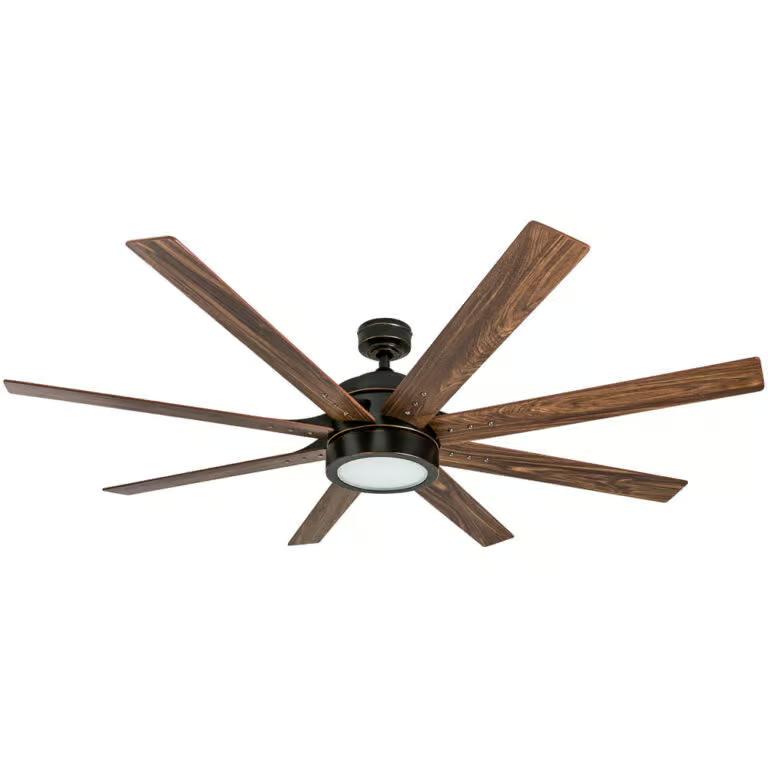 Best For: Large living rooms, open floor plans, and vaulted ceilings
Typical Cost: $350-$450+ without installation
The Honeywell Xerxes 62-inch Ceiling Fan is built for large, open spaces that need both strong airflow and a modern design touch. With its oversized blade span and sleek finish, it stands out more than a standard builder-grade fan. Designed for rooms over 400sqft, it delivers powerful circulation while the included remote control and integrated LED light add everyday convenience.
If you want a ceiling fan that makes a visual statement while effectively cooling a large room, the Xerxes is a strong mid-range choice.
Best For: Large living rooms, open floor plans, and vaulted ceilings
Typical Cost: $350-$450+ without installation
The Honeywell Xerxes 62-inch Ceiling Fan is built for large, open spaces that need both strong airflow and a modern design touch. With its oversized blade span and sleek finish, it stands out more than a standard builder-grade fan. Designed for rooms over 400sqft, it delivers powerful circulation while the included remote control and integrated LED light add everyday convenience.
If you want a ceiling fan that makes a visual statement while effectively cooling a large room, the Xerxes is a strong mid-range choice.
As you move up in price, you’re typically paying for stronger airflow (higher CFM), DC motors, smart automation, premium materials, and larger blade spans.
What Makes the Best Ceiling Fan in 2026?
Before jumping into specific models, you need to understand what actually separates a high-performing ceiling fan from one that simply looks good on the ceiling. In 2026, the best ceiling fans aren’t just stylish; they’re energy-efficient, smart-enabled, properly sized, and powerful enough to move air effectively in your space.Energy Efficiency
One of the biggest upgrades in modern ceiling fans is the use of DC motors. Compared to traditional AC motors, DC motors use less energy, operate much more quietly, and offer more speed settings for better airflow control. If you’re replacing a fan that’s more than 10 years old, upgrading to a DC motor model alone can significantly reduce your electricity use while improving overall comfort.Smart Home Integration
Many of the best ceiling fans in 2026 come equipped with built-in smart features. These often include WiFi connectivity, app-based controls, Alexa or Google Assistant compatibility, and smart scheduling options. This allows you to automate airflow based on the time of day or temperature changes, giving you greater convenience and more consistent comfort without constant manual adjustments.Proper Sizing for Your Room
The best ceiling fan isn’t determined by brand alone; it’s about choosing the right size for your space. For rooms under 100 square feet, a 29–36-inch fan is typically ideal. Spaces between 100–400 square feet generally require a 42–52 inch fan, while larger rooms over 400 square feet often need a 52–60+ inch model. Oversizing or undersizing is one of the most common mistakes homeowners make, and it can lead to inadequate airflow or an overpowering breeze.Airflow (CFM Ratings)
Airflow performance is measured in CFM, which stands for Cubic Feet per Minute. This rating tells you how much air the fan moves. A ceiling fan rated between 4,000–5,000 CFM is considered good, while 6,000+ CFM is excellent. If your primary goal is improving comfort and circulation, CFM is one of the most important specifications to review.Best Ceiling Fan for Homeowners in 2026: Top Picks
Below are our top-rated ceiling fans based on performance, reliability, energy efficiency, and value.1. Hunter Aerodyne Smart Ceiling Fan (Best Overall)
Best For: Homeowners who want strong performance and smart features without overspending.
Typical Cost: $200-$300+ without installation
The Hunter Aerodyne remains a top pick in 2026 thanks to its balance of airflow, quiet operation, and built-in smart technology. With Wi-Fi connectivity and compatibility with Alexa and Google Assistant, it integrates easily into most smart homes while maintaining a clean, modern look.
If you want a reliable, smart ceiling fan without overspending, the Hunter Aerodyne is a strong overall choice.
2. Minka-Aire Light Wave Ceiling Fan (Best Modern Design)
Best For: Design-conscious homeowners who want a statement piece.
Typical Cost: $400+ without installation
The Minka-Aire Light Wave is especially popular in contemporary and modern homes thanks to its sleek, sculptural blade design. It’s a fan that doubles as a design feature, making it ideal for homeowners who care just as much about aesthetics as performance. Beyond its appearance, it includes an energy-efficient DC motor and an integrated LED light, offering quiet and efficient operation.
If visual appeal is a top priority and you want a fan that complements a modern space, the Light Wave is a strong contender.
3. Haiku L Smart Ceiling Fan (Best Premium Option)
Best For: Homeowners who want top-tier performance, automation, and cutting-edge technology.
Typical Cost: $850-$1,200+ without installation
Haiku fans are widely considered the gold standard in residential ceiling fans, and for good reason. The Haiku L Smart Ceiling Fan combines advanced automation with exceptional airflow and energy efficiency. It’s designed for homeowners who want a high-performance system that essentially runs itself.
If you want the smartest, most advanced ceiling fan available in 2026 and you’re willing to invest in premium performance, this is the option for you.
4. Harbor Breeze Mazon Ceiling Fan (Best Budget Option)
Best For: Budget-conscious homeowners who need a simple, functional replacement
Typical Cost: $140+ without installation
The Harbor Breeze Mazon is a solid entry-level ceiling fan for smaller spaces. It’s compact, affordable, and practical, making it a popular choice for bedrooms, apartments, or rooms where you simply need basic airflow without premium features.
If you’re replacing a basic fan and want a cost-effective solution without investing in advanced technology, the Harbor Breeze Mazon is a dependable budget option.
5. Honeywell Xerxes 62-Inch Ceiling Fan (Best for Large Rooms)
Best For: Large living rooms, open floor plans, and vaulted ceilings
Typical Cost: $350-$450+ without installation
The Honeywell Xerxes 62-inch Ceiling Fan is built for large, open spaces that need both strong airflow and a modern design touch. With its oversized blade span and sleek finish, it stands out more than a standard builder-grade fan. Designed for rooms over 400sqft, it delivers powerful circulation while the included remote control and integrated LED light add everyday convenience.
If you want a ceiling fan that makes a visual statement while effectively cooling a large room, the Xerxes is a strong mid-range choice.
Ceiling Fan Cost in 2026: What Should Homeowners Expect?
One of the most common questions homeowners ask is: How much does a ceiling fan cost in 2026? The answer depends on the fan’s features, motor type, smart capabilities, and installation complexity.Fan Unit Cost (By Tier)
In general, ceiling fan pricing falls into three categories.- Budget ($100-$200+)
- Mid-Range ($200-$400+)
- Premium ($500-$1,200+)
| Fan Model | Cost Category | Typical Price Range (without installation) |
| Harbor Breeze Mazon |
Budget |
$120-$180+ |
| Hunter Aerodyne |
Mid-Range |
$200-$300+ |
|
Minka-Aire Light Wave |
Mid-High |
$350-$450+ |
| Honeywell Xerxes |
Mid-High |
$350-$450+ |
| Haiku L Smart Fan |
Premium |
$700-$1,200+ |
Installation Cost & Total Investment
Installation costs vary based on the complexity of the job. If you’re simply replacing an existing ceiling fan with no wiring changes, you can expect to pay $100–$250 for installation. However, if new wiring is required, the ceiling is high or vaulted, or additional electrical work is needed, installation may range from $300–$600+. When you combine the fan unit and professional installation, most homeowners invest between $500 and $2000+ total, depending on the model selected and the difficulty of the installation. The key is choosing a fan that matches your room size, comfort needs, and long-term goals, not just the lowest price point.How to Choose the Best Ceiling Fan for Your Home
Choosing the right ceiling fan is about matching the fan to your space, lifestyle, and comfort goals. Before making a decision, take time to think through the factors that will affect performance and long-term satisfaction. Start with room size. The square footage of your space determines the blade span and airflow you need. A fan that is too small will not circulate air effectively, while one that is too large can feel overpowering. You should also consider a few key factors:- Smart features vs. simplicity. Decide whether app control and automation matter to you or if a basic wall switch is enough.
- Budget range. Include both the fan unit and installation costs in your plan.
- Airflow vs. design. Performance should come first, but the fan should still complement your space.
- DIY or professional installation. High ceilings or new wiring may require expert installation. Make sure to measure your room and confirm your ceiling height.