

If you’ve started pricing out a new HVAC system, you’ve probably felt the sticker shock already.
Why does one contractor quote $7,500 while another says $14,000 for what seems like the same system? Why won’t some companies give you a number without a home visit? And how can you tell if you’re paying for real value or just inflated add-ons?
At Eco Plumbers, Electricians, and HVAC Technicians, we’ve helped hundreds of homeowners compare HVAC estimates, understand what actually drives pricing, and avoid costly mistakes. We’ve seen people overspend on features they didn’t need and others who regret choosing the lowest bid.
In this article, we’ll break down exactly what impacts HVAC system costs, what’s worth paying for (and what’s not), how to confidently compare quotes, and practical ways to avoid overpaying so you can make a smart, informed decision with confidence.
In milder climates, ultra-high efficiency systems may not generate enough additional savings to justify the price difference. In extreme climates, systems can run heavily for long seasons, so the long-term return is often much stronger.
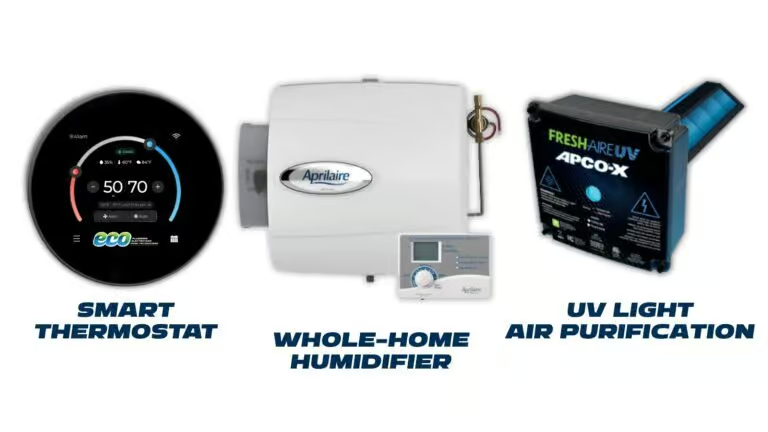 Modern HVAC systems offer a wide range of upgrades designed to improve comfort, convenience, and indoor air quality.
These can include smart thermostats that learn your schedule, zoning systems that allow different temperatures in different areas of your home, whole-home humidifiers for balanced moisture control, advanced air filtration systems, and UV air purification to reduce airborne contaminants.
While these features can noticeably enhance comfort and air quality, each one adds to the total project cost. The key is understanding which upgrades solve real problems in your home and which ones are simply extras.
Modern HVAC systems offer a wide range of upgrades designed to improve comfort, convenience, and indoor air quality.
These can include smart thermostats that learn your schedule, zoning systems that allow different temperatures in different areas of your home, whole-home humidifiers for balanced moisture control, advanced air filtration systems, and UV air purification to reduce airborne contaminants.
While these features can noticeably enhance comfort and air quality, each one adds to the total project cost. The key is understanding which upgrades solve real problems in your home and which ones are simply extras.
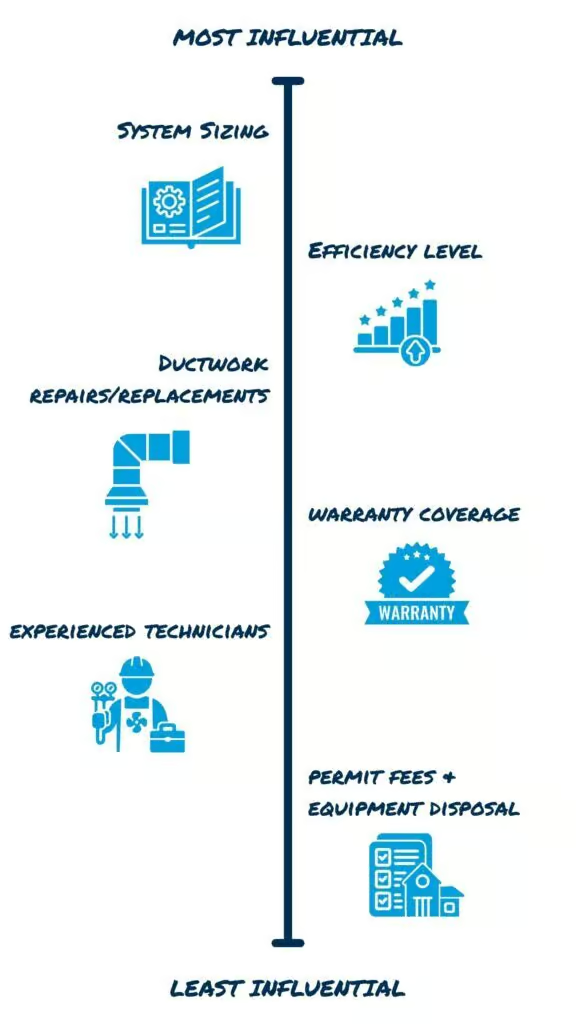 One of the biggest factors is system sizing. Not every contractor performs the same level of load calculation. One may recommend a larger system “just to be safe,” while another carefully sizes the equipment based on
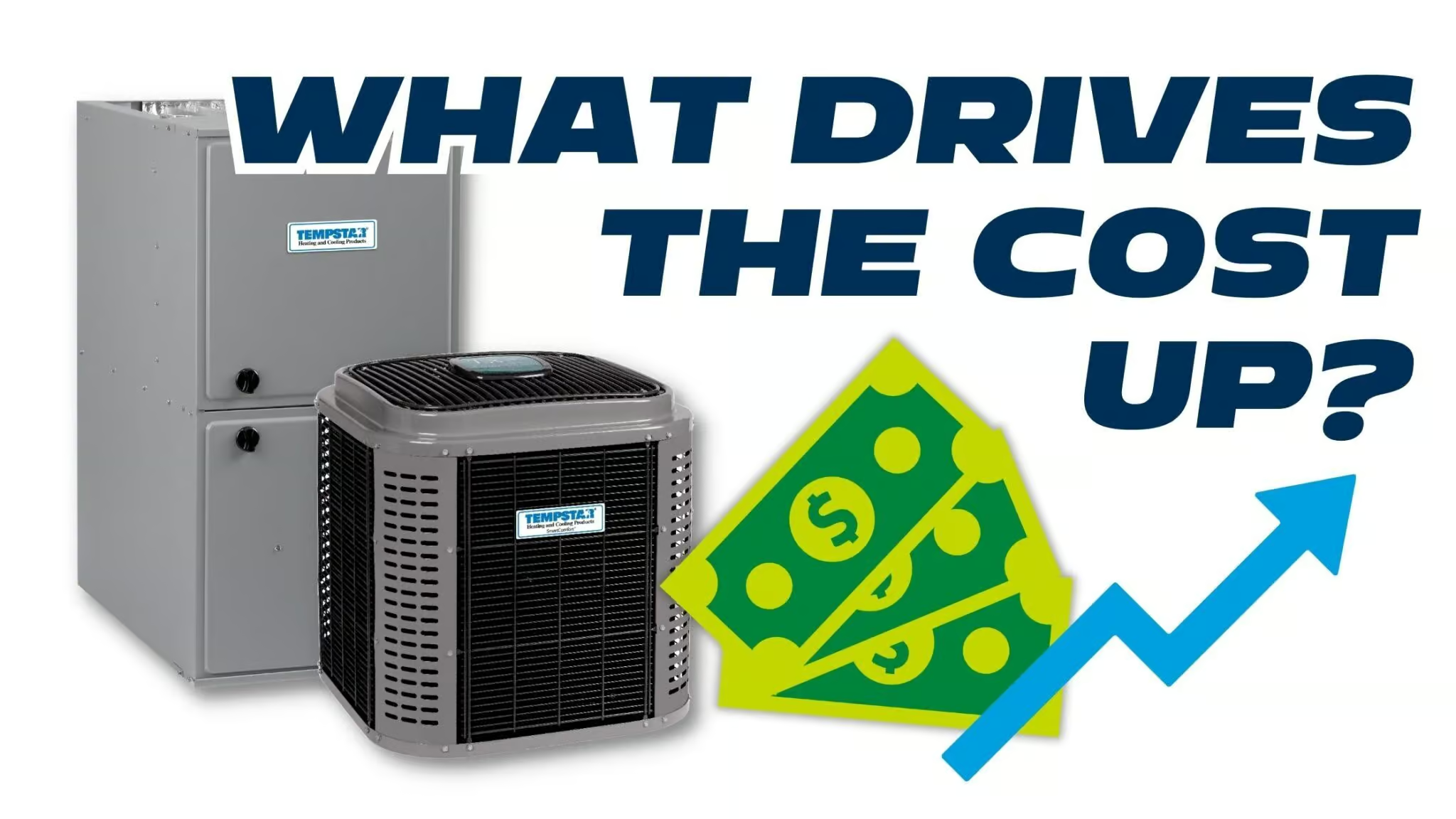
The 7 Biggest Factors That Drive HVAC System Costs Up
1. HVAC System Size (Bigger Isn’t Always Better)
When it comes to HVAC systems, bigger doesn’t mean better, and smaller doesn’t mean cheaper in the long run. Your HVAC system should be sized based on far more than just square footage. A proper installation includes a Manual J® load calculation, which evaluates your home’s insulation levels, layout, window placement, ceiling height, air leakage, and even your local climate. If a contractor skips this step and simply “guesses” based on square footage alone, these problems could follow.- Too Large: The system short-cycles (turns on and off frequently), struggles with humidity control, and wastes energy
- Too Small: The system runs constantly, can’t keep up during extreme weather, and wears out faster.
2. Efficiency Rating (SEER2 and AFUE)
Higher efficiency systems come with a higher upfront investment, but they can reduce your monthly energy bills over time. For air conditioners and heat pumps, efficiency is measured by SEER2 (Seasonal Energy Efficiency Ratio 2). For furnaces, efficiency is measured by AFUE (Annual Fuel Utilization Efficiency). Here’s how efficiency levels typically impact price.| Efficiency Level | Typical Rating | Upfront Cost Impact | What It Means For You |
| Basic Efficiency | 13-15 SEER2 / 80% AFUE | Lower upfront cost up to $16,000+ | Lower purchase price, higher long-term energy use |
| Mid-tier Efficiency | 16-17 SEER2 / 90-95% AFUE | Moderate price increase up to $20,000+ | Balanced upfront cost and energy savings |
| High Efficiency | 18+ SEER2 / 96%+ AFUE | Premium pricing up to $30,000+ | Highest upfront investment, lowest operating costs |
3. Ductwork Condition (The Hidden Cost Driver)
Damaged or poorly designed ductwork can quietly add thousands of dollars to your HVAC project and impact how well your new system performs. If your ductwork leaks air, is improperly sized, lacks insulation, or was designed with poor airflow in mind, your new HVAC system won’t operate the way it should. Even a high-efficiency system can struggle if the air distribution system behind the walls isn’t supporting it properly.4. Installation Complexity
Not all HVAC installations are created equal, and the complexity of the job can significantly impact your total cost. Prices tend to increase when the installation presents additional challenges. For example, units located in tight attics or crawlspaces require more labor and time. Electrical panels may need upgrades to handle the new system, and gas lines sometimes require modification. In some homes, structural changes are necessary to accommodate new equipment. Because of these variables, two homeowners can choose the exact same HVAC system and still see their final prices differ by thousands of dollars. In many cases, it’s not the equipment driving the cost; it’s the complexity of the installation itself.5. Brand and Equipment Tier
Brand also plays a role in HVAC pricing. Premium brands often come with higher price tags, but many mid-tier manufacturers use similar internal components and meet the same performance standards. In many cases, the differences aren’t in how the system heats or cools your home day to day. What often separates brands is warranty coverage, availability of replacement parts, and how familiar your contractor is with installing and servicing that specific equipment.6. Smart Features and Add-Ons
Modern HVAC systems offer a wide range of upgrades designed to improve comfort, convenience, and indoor air quality.
These can include smart thermostats that learn your schedule, zoning systems that allow different temperatures in different areas of your home, whole-home humidifiers for balanced moisture control, advanced air filtration systems, and UV air purification to reduce airborne contaminants.
While these features can noticeably enhance comfort and air quality, each one adds to the total project cost. The key is understanding which upgrades solve real problems in your home and which ones are simply extras.
7. Contractor Experience and Reputation
When it comes to HVAC installation, cheaper isn’t always better. Highly reputable contractors often charge more, and usually there’s a reason for it.- Use certified and factory-trained installers
- Perform proper load calculations instead of guessing
- Offer stronger labor and equipment warranties
- Carry higher levels of insurance and proper licensing
- Stand behind their work long after the installation is complete
- Corners being cut during installation
- Use of unlicensed or inexperienced subcontractors
- Minimal warranty protection or limited post-install support
Why HVAC Quotes Vary So Much
If you’ve started collecting HVAC estimates, you may have already noticed something… three contractors can look at the same home and come back with prices that differ by $5,000 or more. That kind of gap can feel confusing, and even a little alarming. But in most cases, the difference isn’t random. It comes down to what’s being recommended, what’s being included, and how the job is being approached.What Actually Causes the Price Differences in HVAC?
Several key variables influence the final number on your estimate.
One of the biggest factors is system sizing. Not every contractor performs the same level of load calculation. One may recommend a larger system “just to be safe,” while another carefully sizes the equipment based on
- Your home’s square footage
- Insulation levels
- Window type and placement
- Layout and airflow design
- Variable-speed motors
- Two-stage or modulating compressors
- Advanced humidity control
- Smart thermostat compatibility
When Paying More For an HVAC System Is Worth It
In some situations, choosing a higher-priced HVAC system isn’t about upselling. It’s about long-term value. You may benefit from investing more upfront if you plan to stay in your home for many years and want to prioritize comfort and efficiency over the lowest upfront cost. Higher-tier systems can also make sense if lowering your monthly energy bills is a priority for you. More efficient equipment often reduces ongoing operating costs, which can add up significantly over time. If your home has persistent hot and cold spots, struggles with excess humidity, or simply never feels quite comfortable enough, a more thoughtfully designed system may be worth the investment. Mid to high-tier equipment often includes features like variable-speed operation and improved airflow control, which help maintain consistent temperatures and better humidity balance throughout the home. You might also see added value if indoor air quality is a concern. Advanced systems can integrate more effectively with air purification, filtration, and ventilation upgrades. In these cases, investing in mid to high-tier equipment along with proper system design and installation can significantly improve your daily comfort.When You Might Be Overpaying for an HVAC System
While higher prices can sometimes reflect better equipment or installation quality, there are also situations where a quote may be inflated. One major red flag is when no load calculation is performed. If a contractor doesn’t measure and evaluate your home to properly size the system, it raises questions about how they arrived at their recommendation and pricing. High-pressure sales tactics should also make you pause. If you’re being pushed to “buy today” to secure a special price, take a step back. A reputable contractor should give you time to review the proposal, ask questions, and feel confident in your decision. If you feel rushed, confused, or unable to get straight answers, take a step back and reevaluate. A trustworthy contractor will prioritize clarity and long-term satisfaction over a quick sale.The Real Cost of Going Too Cheap on an HVAC System
Choosing the lowest-priced HVAC system can feel like a win in the moment, especially when you’re facing a large, unexpected expense. But the cheapest option often carries hidden long-term costs. Over time, a budget system can cost you more through- Higher energy bills due to lower efficiency ratings
- Frequent repairs from lower-quality components or rushed installation
- Shorter system lifespan, meaning you’re replacing it sooner than expected
- Inconsistent comfort, including hot and cold spots
- Humidity problems that affect indoor air quality
- Increased noise levels during operation