

What's Ahead
If you’re reading this, there’s a good chance you’ve either scheduled or are thinking about scheduling a water treatment appointment for your home.
Maybe you’ve noticed strange tastes in your water, stubborn buildup on your fixtures, or concerns about what might be in your water. Or maybe you’ve simply reached a point where you no longer fully trust what’s coming out of your tap. Either way, you’re taking an important step toward improving your home’s water quality, but you may not be sure what actually happens during the appointment.
At Eco Plumbers, Electricians, and HVAC Technicians, we’ve guided thousands of homeowners through this process. One of the most common things we hear is, “I just didn’t know what to expect.”
The reality is, a water treatment appointment should be simple, informative, and tailored to your home when done correctly.
In this article, you’ll learn exactly what to expect during your water treatment appointment, including the key steps, who you’ll meet, the decisions you’ll make, and how to prepare so you can get the most out of your time.
Why Your Water Treatment Appointment Matters More Than You Think
A water treatment appointment is more than a quick visit or a simple product recommendation. It is a thorough evaluation of your home’s water quality, plumbing system, and long-term needs.
During the appointment, a specialist will test your water and explain what is actually in it and how it may be affecting your home and your health. This often includes identifying issues such as:
- Hard water, which causes mineral buildup from calcium and magnesium
- Chlorine or other chemical presence
- Sediment or discoloration
- Potential contaminants, depending on your water source
If this step is rushed or overlooked, you risk ending up with a system that does not fully solve your problem, or one that is more than you actually need.
When done correctly, this appointment sets the foundation for everything that follows and ensures you get a solution that is accurate, effective, and built for your home from the start.
Step 1: Initial Conversation About Your Water Concerns
Your appointment will usually begin with a conversation in your home, often at your kitchen table. This part of the process is focused on understanding your concerns before introducing any solutions.
Your specialist will guide the conversation with questions like:
- Have you noticed any unusual taste or odor in your water?
- Are you dealing with hard water stains or buildup?
- Do you have concerns about contaminants or health risks?
- Are certain areas of your home more affected than others?
- Do you have a general budget range in mind?
Your answers here play a major role in shaping the recommendations you receive.
For instance, ongoing mineral buildup may point to the need for a water softener, while concerns about drinking water quality may lead to a filtration or reverse osmosis solution.
Step 2: In-Home Water Testing and System Evaluation
Next, your specialist will begin testing your water and evaluating your plumbing system. This is the point where you move from assumptions to clear, measurable data about your water quality. During this step, they may:
- Test your water’s hardness levels
- Check for chlorine or other chemical presence
- Measure total dissolved solids (TDS)
- Identify any visible sediment or discoloration
- Review your plumbing setup and main water entry point
In many cases, you will be able to see the test results in real time, making it easier to understand exactly what is happening in your water.
This part of the appointment can often reveal unexpected findings. Water that appears clean may still contain high levels of minerals. Homes connected to city water can still have chlorine or other treatment byproducts present. If you have well water, it may contain iron, sulfur, or even bacteria.
This testing phase is one of the most important steps because it replaces guesswork with clear, reliable information.
Step 3: Identifying the Right Water Treatment Solution
Once your water has been tested, your specialist will begin connecting the results to the right solutions. This is where your appointment shifts from discovery to problem-solving.
Depending on your results and goals, you may be presented with options like the following:
System Type | What It Does | Key Benefits | Considerations |
Water Softener | Removes hardness minerals like calcium and magnesium | Prevents scale buildup and extends appliance lifespan | Does not address chemicals or contaminants |
Whole-Home Filtration | Filters water as it enters your home | Reduces chlorine, improves taste and odor | May not remove all dissolved contaminants |
Reverse Osmosis System | Purifies drinking water at a single point | Removes contaminants at a very fine level | Limited to one faucet, slower water output |
Specialty Systems | Targets specific issues like iron, sulfur, or bacteria | Solves unique or severe water quality problems | Only needed in specific situations |
Your specialist should walk you through each option in detail, explaining what each system does, why it may or may not apply to your specific situation, and the pros and cons of each choice.
The goal is not to recommend every possible system, but to guide you toward the solution that best fits your specific water concerns.
Step 4: Reviewing Installation Requirements and Logistics
After narrowing down the right solution, your specialist will evaluate how the system will be installed in your home. This step ensures the solution works in your specific space, not just on paper. During this part of the appointment, they will assess:
- Where your main water line enters the home
- The available space for equipment
- Drainage requirements
- Any electrical needs, if applicable
- Accessibility for future maintenance
This is also a point where potential challenges may surface. For example:
- Limited space may impact system size or placement
- Older plumbing may require minor upgrades
- Drain access may affect how the system is installed
Addressing these details early helps prevent delays, unexpected costs, and installation issues later on.
Step 5: Transparent Pricing and Recommendation Review
Once everything is clearly defined, including your water quality results, your needs, and any installation requirements, you will receive a detailed recommendation along with a quote.
Your estimate should go beyond a single number and explain exactly what you’re paying for, such as:
- Parts and labor
- Diagnostic fees (if applicable)
- Maintenance services
- Equipment costs (for replacements)
- Any additional work required
As you review it, take the time to fully understand:
- What is included versus not included
- What factors could affect the final price
- Expected maintenance costs over time
- Whether financing options are available
If any of this is unclear, ask. A good specialist will walk you through the details and make sure you feel comfortable with the investment. By the end of this step, you should feel informed and confident in your options, not pressured into a decision.
Step 6: What Happens If You Move Forward
If you decide to move forward with a water treatment system, your specialist will clearly outline what happens next. This step gives you a clear path forward so you know exactly what to expect after the appointment.
Typical next steps include:
- Scheduling your installation date
- Ordering the necessary equipment
- Preparing your home, if any adjustments are needed
- Completing the installation and final system testing
Most water treatment installations are relatively quick and can often be completed within a few hours to a full day, depending on the system and setup. Having clear expectations at this stage helps you plan ahead and move forward with confidence, without unnecessary surprises or stress.
How to Prepare for Your Water Treatment Appointment
To get the most value from your appointment, a little preparation can make a big difference. The more clarity you bring, the more accurate and tailored your solution will be.
Before your appointment, take a few minutes to think through your water concerns, such as taste, odor, or buildup, and identify which issues matter most to you. It is also helpful to make sure your main water line or utility area is easily accessible so your specialist can evaluate it without delays.
As you prepare, come in with a general idea of your budget. If you are unsure, you can use our online estimator to get a realistic range based on your needs. This helps guide a more productive conversation and ensures the recommendations align with what you are comfortable investing.
Make Your List
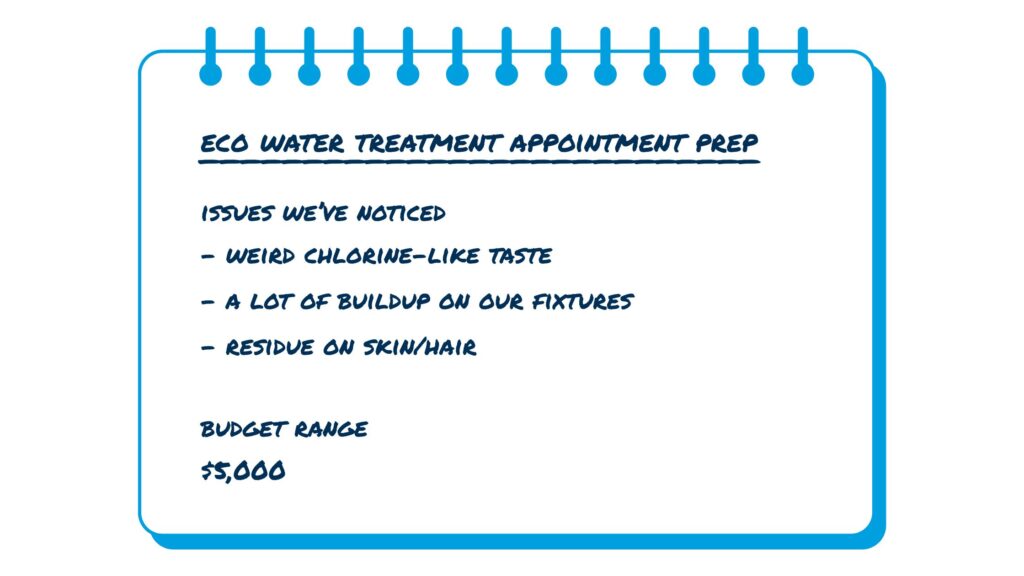
There are also a few optional steps that can be helpful, such as gathering recent water bills for reference, noting when your water issues are most noticeable, and being aware of any past plumbing or water system concerns.
This small amount of preparation helps turn your appointment into a focused, productive conversation centered on finding the right solution for your home.
What Comes Next After Your Appointment?
At the end of the day, dealing with water issues like bad taste, buildup, or uncertainty about what’s in your water can be frustrating and, in some cases, concerning. That’s what likely brought you here in the first place.
Now, you have a clear understanding of what happens during a water treatment appointment and how each step is designed to identify the problem and guide you toward the right solution. You are no longer guessing what to expect or how decisions will be made.
Before you schedule, your next step is to understand the investment side of this decision. Knowing what water treatment systems cost and whether they are worth it will help you move forward with confidence.
At Eco Plumbers, Electricians, and HVAC Technicians, we believe in giving you complete transparency so you can make the best decision for your home.
Your next step is to read our blog, Water Treatment Systems Cost—Is It Worth It? so you can better understand pricing, what impacts cost, and how to determine the right investment for your needs.
FAQs
How long does a water treatment system last after installation?
Most water treatment systems are built to last for many years, but the lifespan depends on the type of system and how well it is maintained. For example, water softeners and whole-home filtration systems can often last 10 to 15 years, while components like filters or membranes may need to be replaced more frequently. Regular maintenance plays a major role in extending the life of your system.
Will a water treatment system affect my water pressure?
In most cases, a properly sized and professionally installed system should not negatively impact your water pressure. However, if a system is undersized, clogged, or not maintained, it can lead to reduced flow over time. This is why proper sizing during your appointment and ongoing maintenance are important to ensure consistent performance.
Can I install a water treatment system myself, or should it always be a professional?
While some smaller, point-of-use systems can be installed by homeowners, most whole-home water treatment systems should be professionally installed. This ensures the system is correctly sized, properly connected to your plumbing, and compliant with local codes. Professional installation also helps avoid issues like leaks, drainage problems, or reduced system effectiveness.