


A bathroom drain that takes forty seconds to empty when it used to take ten is honestly the most ignored warning sign in homeownership.
Not bad enough to call a plumber. Not so bad the sink overflows. So most folks keep using it, maybe pour drain cleaner down once a month, and pretend everything’s fine until the tub fills with greasy water during a Sunday morning shower. By that point, the bathroom drain clogged isn’t just slow; it’s coated with soap scum, hair, and biofilm running the length of the pipe. The cheap fix window already closed.
Five things actually happening when a drain slows but still works:
- Hair and soap scum forming a partial mat further down the line.
- Biofilm growing along the pipe wall, narrowing the effective drain diameter.
- Mineral deposits building up in older galvanized lines.
- Vent line restriction making it harder for water to push through the trap.
- Buildup at the P-trap or just past it, in the section homeowners can’t see.
Each one has a different fix. Knowing which is which saves real money over throwing chemicals at it and hoping.
1. The Hair and Soap Scum Combination That Wrecks Most Drains
This is the number one cause of slow bathroom drains. It’s also the easiest one to verify with a flashlight and a paperclip.
Hair sheds in the shower and sink every single day, gets caught on tiny imperfections inside the pipe, and over a few weeks weaves into a mat that catches everything else moving down the line. Soap scum, especially from bar soaps, builds up alongside the hair into a sticky mass water has to squeeze around. Signs hair is the issue:
- Drain gets noticeably worse after long showers or hair washing days.
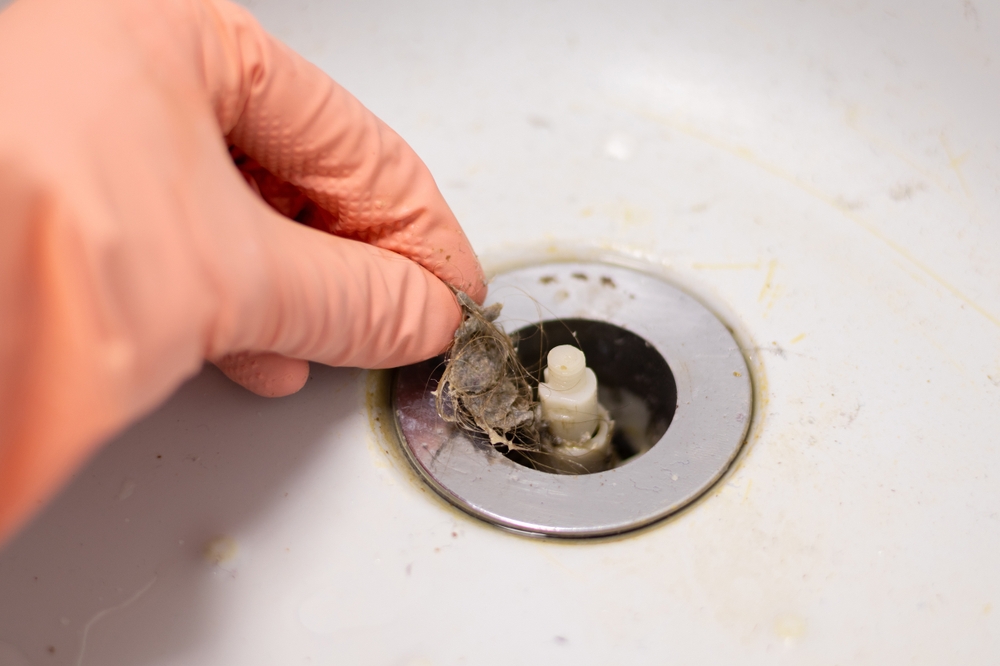
- Visible hair caught at the pop up assembly when pulled out.
- Gurgling when water finally clears, meaning air is pushing past a partial blockage.
- Recurring slow drain even after store bought cleaner is used multiple times.
Most pop up sink stoppers come out with a quarter turn and a lift. That alone exposes the worst of the hair mat right at the top of the drain. Pulling it out manually solves a real chunk of complaints in under five minutes.
2. The Biofilm Layer Most Homeowners Have Never Heard Of
Bathroom pipes accumulate something called biofilm, and it’s grosser than most folks want to think about.
Biofilm is a slimy layer of bacteria, soap residue, body oils, and organic matter that grows along the inside of bathroom drain pipes, especially lines that don’t see hot water often. Over months, biofilm narrows the effective inside diameter of the pipe, slowing water flow even when there’s no obvious clog at the trap. Common signs biofilm is the issue:
- Drain smells faintly sour or musty even when nothing’s visibly clogged.
- Slow flow that doesn’t fully resolve after pulling hair from the stopper.
- Black or pinkish residue forming around the drain opening between cleanings.
- Slow drain returns within a few weeks of any cleaning attempt.
Hot water flushing alone doesn’t fully clear biofilm. Enzyme based drain treatments, used regularly over a few weeks, work better than chemical drain openers for this specific issue, and they don’t damage the pipe over time.
3. When the Slow Drain Is Actually a Vent Problem
Plumbing vents are the part of the system most homeowners don’t even know exists, and they cause a surprising number of slow drain complaints.
Every drain in the house connects to a vent stack running up through the roof, letting air enter the system as water flows out. When that vent gets blocked, by leaves, a bird nest, or a winter ice plug, water has to pull air through the trap itself to drain. That slows everything dramatically. A homeowner facing a bathroom drain clogged but not fully blocked issue should check for these specific vent symptoms:
- Drain improves dramatically right after a heavy rain or strong wind.
- Gurgling comes from a different drain than the one being used.
- Bubbling sound from toilet water when other fixtures are draining.
- Slow drainage in multiple bathrooms at the same time, not just one.
Vent stack issues require climbing on the roof or running a snake down from above. Neither is a normal DIY job. Reputable Bathroom Plumbing Services in Chillicothe, OH, diagnose vent issues quickly and clear them safely without damaging the roof or the stack.
4. The Older Pipes That Quietly Lose Their Diameter
Homes built before 1980 in Ohio often have galvanized steel drain lines. Those pipes have a quiet problem that gets worse every year.
Galvanized lines corrode from the inside out. Mineral and rust buildup gradually narrows the effective drain diameter until even normal water flow turns into a struggle. This problem doesn’t respond to drain cleaners or snaking, since the issue isn’t a single blockage, it’s the entire interior wall of the pipe getting smaller. Signs of failing galvanized lines:
- Multiple slow drains across an older house, not just one bathroom.
- Recurring slow flow that no amount of cleaning permanently fixes.
- Visible rust staining around drain openings even after thorough cleaning.
- Brown or orange tinted water from nearby fixtures occasionally.
This is one situation where the right answer is genuinely pipe replacement, not more cleaning. Continuing to clean a corroded galvanized line is throwing money at a problem that just keeps getting worse on its own schedule.
5. The Proper Diagnostic Order
Most slow bathroom drain problems get diagnosed properly in about thirty minutes with the right approach. That approach starts with elimination.
Pull the pop up assembly first, clear any visible hair, and run hot water for a full minute. If that solves it, the issue was at the stopper. If still slow, snake the trap manually with a small drain auger from any hardware store. Still slow after that, and the issue is past the trap, which usually means professional diagnostic equipment makes more sense than further DIY effort. The order most plumbers use:
- Stopper and pop up assembly inspection first, resolves a third of cases.
- P-trap removal and physical cleaning, catches another big slice.
- Hand auger snaking past the trap to clear branch line buildup.
- Camera inspection if multiple cleanings haven’t resolved the issue.
- Hydro jetting or rooter equipment for severe biofilm or sediment cases.
A licensed plumber shouldn’t jump straight to expensive equipment without working through these steps first.
A slow bathroom drain is a problem that quietly gets worse on its own schedule, and the homeowners who address it early consistently spend less than the ones who wait for full backups. Hair, biofilm, vent restrictions, aging galvanized pipes, and sediment buildup each call for different fixes, and the diagnostic process matters more than the cleaning method. Most slow drains respond to twenty minutes of careful work at the stopper and trap. The stubborn ones need professional attention before they turn into full backups. Catching it early is the whole game.
“Drain still slow? Call us, Eco Plumbers, Electricians, and HVAC Technicians, at 614-665-5400 for fast diagnostics when your bathroom drain clogged, today.”
FAQs
Q1: Why is my bathroom drain slow but not fully clogged in Chillicothe, OH?
Most often, it’s hair and soap scum forming a partial mat at the pop-up stopper, biofilm coating the pipe interior, or a vent stack restriction higher up in the system. Pulling the stopper and clearing visible hair solves a real chunk of these complaints in under five minutes, and from there the diagnostic process moves further down the line.
Q2: Are chemical drain cleaners safe to use in Chillicothe, OH?
Caustic chemical drain cleaners damage older pipes over time, especially aging galvanized lines and even some PVC sections at higher concentrations. Enzyme based drain treatments work better long term for biofilm and organic buildup, and they don’t degrade the interior of the pipe the way harsh chemicals do across multiple uses.
Q3: How often should I have my bathroom drains professionally cleaned in Chillicothe, OH?
Most homes benefit from a professional bathroom drain cleaning every two to three years under normal use, though households with long hair, hard water, or aging galvanized piping often benefit from annual service. A quick camera inspection during the visit identifies any developing issues while they’re still cheap to address, before they turn into actual backups.