


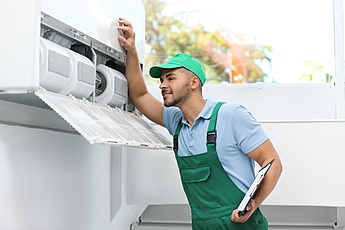
Annual AC service is one of those line items most homeowners pay for without ever really watching what’s happening inside the air handler closet. The tech rolls up, disappears for an hour, hands over a clipboard with a few checkmarks, and the bill gets paid before the truck pulls out of the driveway. Once you understand what an AC maintenance technician in Dayton, OH, is actually inspecting and adjusting on every visit, the value of that hour starts looking very different, and the difference between a cheap discount tune up and a real one becomes obvious in a hurry.
What separates a real visit from a drive by:
- A real visit lasts 60 to 90 minutes, not 20.
- A real visit involves opening multiple access panels, not just changing a filter.
- A real visit ends with a written report covering 15 to 20 specific checkpoints.
- A real visit catches small problems before they become summer emergencies.
That last point is honestly where the entire value lives.
1. The Initial Walkthrough and Conversation
A solid service visit starts with conversation, not with tools coming out of the truck.
The tech asks how the system has been running lately, whether anything sounds different, and whether any specific rooms have felt off in temperature or humidity over recent weeks. Those answers genuinely shape the rest of the inspection, since a homeowner mentioning a faint hum from the outdoor unit points the tech toward checking specific components first. A good walkthrough also covers the basics:
- Confirming the make, model, and age of the system, both indoor and outdoor.
- Reviewing service history, especially any recent repair work or refrigerant additions.
- Asking about thermostat behavior and any recent settings changes.
- Walking through the home briefly to note return vent placement and supply register coverage.
Skip the conversation and the inspection becomes guesswork. Honest techs always ask first.
2. Outdoor Unit Inspection and Cleaning
The condenser cabinet outside takes the first real chunk of the technician’s hands on time during the visit.
A trained cooling system technician walks the unit before powering anything on, looking for visible damage, debris in the fins, oil stains on the copper lines, or signs of refrigerant leak. Common items handled at the outdoor cabinet:
- Removing the fan grill and inspecting the blade for wobble, cracks, or bearing wear.
- Cleaning the coil fins with a coil cleaner and gentle rinse, working from inside out.
- Straightening any bent fins with a fin comb, since bent fins choke airflow noticeably.
- Checking the disconnect box, the contactor inside, and visible wire condition.
- Measuring refrigerant pressures on both the suction and liquid lines.
That refrigerant reading alone catches a real chunk of small leaks before they cascade into compressor failures, which makes the outdoor inspection arguably the most valuable single segment of the entire service visit.
3. Indoor Air Handler and Coil Service
Inside the home, attention shifts to the air handler closet, where the evaporator coil, blower assembly, and electrical board all live behind a metal access panel.
The tech pulls the panel and looks first at the evaporator coil itself, checking for biological buildup, dust matting, or corrosion on the aluminum fins. Filter replacement happens here too, with the tech noting filter size and condition for the homeowner. Other items handled during the indoor portion:
- Vacuuming surface dust off the coil with a soft brush attachment.
- Inspecting the blower wheel for caked dust, which silently kills airflow.
- Tightening every accessible electrical terminal connection inside the air handler.
- Flushing the condensate drain line with vinegar or compressed air.
- Checking the float switch on the drain pan, which acts as a safety shutoff if water backs up.
A clean coil and a clear drain line solve more callbacks than almost anything else, and both get handled inside this single panel access.
4. Thermostat, Controls, and System Calibration
Modern systems live and die by their controls, which is exactly why a real tune up always circles back to the thermostat before wrapping up.
The technician verifies the thermostat is calling for cooling correctly, that the cycle starts and stops cleanly, and that the temperature differential between the setpoint and the actual room reading matches manufacturer specifications. Homes with newer connected setups often get reviewed alongside any active smart thermostat services in Cincinnati, OH, the homeowner has subscribed to, since smart features sometimes interact strangely with older equipment. Items checked during this segment:
- Thermostat calibration against an independent temperature reference.
- Mode switching between cooling, heating, and fan only operation.
- Cycle timing, both cycle on and cycle off duration during normal operation.
- Wi-Fi connectivity status on smart thermostats, plus firmware update checks.
- Setpoint differential and any anti short cycle settings active in the system.
Half of homeowner comfort complaints turn out to be control problems, not equipment problems, which makes this segment quietly important.
5. The Documented Report and Honest Recommendations
The visit ends the way it started, with conversation and paperwork, not just an invoice.
A real AC inspection service wraps with a written report covering every checkpoint touched during the visit, including refrigerant pressures, amp draws, capacitor readings, and any items needing future attention. The honest tech walks the homeowner through that report at the kitchen table, separating items needing immediate repair from items worth watching during the next service cycle. Things to look for in a quality report:
- Specific measurements written down, not just checkmarks in boxes.
- Photos attached showing any visible problems found inside the system.
- Recommendations broken into urgent, monitor, and informational categories.
- Honest acknowledgment when the system is genuinely fine and needs nothing right now.
A tech who says “everything looks good, see you next year” is being honest, and that honesty is genuinely worth paying for over time.
A good AC maintenance visit is a real piece of work, not a quick filter swap and a friendly handshake at the door. Sixty to ninety minutes of hands on inspection across the outdoor cabinet, indoor air handler, thermostat controls, and full system electrical leaves a system measurably better than it started.
The reason annual service pays for itself isn’t the cleaning, it’s the catching, since a small refrigerant leak found in March costs a tiny fraction of the same leak discovered in late July. Homeowners who watch what the tech actually does also tend to spot which companies are running honest tune ups versus the ones moving through houses like a discount factory line. The hour spent is one of the cheapest forms of insurance in homeownership.
“Want a real tune up, not a drive by? Call us, Eco Plumbers, Electricians, and HVAC Technicians, at 937-699-5741 for an honest ac maintenance technician in Dayton, OH.”
FAQs
Q1: How long should an AC maintenance visit really take in Dayton, OH?
A real service visit runs between 60 and 90 minutes for a single residential system, including the outdoor inspection, indoor air handler service, thermostat calibration, and the closing report walkthrough. Anything wrapping up in under thirty minutes is usually a quick filter swap labeled as a tune up, which is genuinely not the same thing in practice.
Q2: What should I expect on the report after an AC tune up in Dayton, OH?
A quality report includes the actual measurements taken during the visit, refrigerant pressures, amp draws, capacitor readings, plus any photos of issues found inside the system. The tech should walk through the findings at the kitchen table, separating immediate repairs from items worth monitoring on the next service visit.
Q3: Should I be present during the AC service visit in Dayton, OH?
Being home for at least the start and the close of the visit is genuinely worth it, since the opening conversation shapes the inspection and the closing walkthrough explains what the tech actually found in the system. Most reputable providers across the Miami Valley are completely fine working independently in between, especially in homes with garage code or lockbox access already arranged ahead of the appointment.