


When the power goes out at your home, it’s more than just an inconvenience. The refrigerator stops running. The sump pump goes quiet during a heavy storm. In the winter, the heat turns off. In the summer, the air conditioner quits cooling. You’re left scrambling for flashlights, checking the breaker panel, and wondering how long the outage will last. For many homeowners, that uncertainty is the most stressful part.
That stress is what leads many homeowners to consider a standby generator. But once you decide to move forward and request a quote, a new set of questions usually comes up.
What happens during a generator installation?
How long will it take to install my generator?
Who handles the permits and inspections needed for my generator?
What should I actually expect from my generator install?
At Eco Plumbers, Electricians, and HVAC Technicians, we help homeowners navigate this process every day. We don’t just install standby generators; we guide you from the initial phone call to schedule through installation and long-term maintenance.
In this article, we’ll walk you through what happens when you contact Eco for a standby generator quote. By the end, you’ll understand exactly how the process works and what to expect so you can move forward with confidence instead of uncertainty.
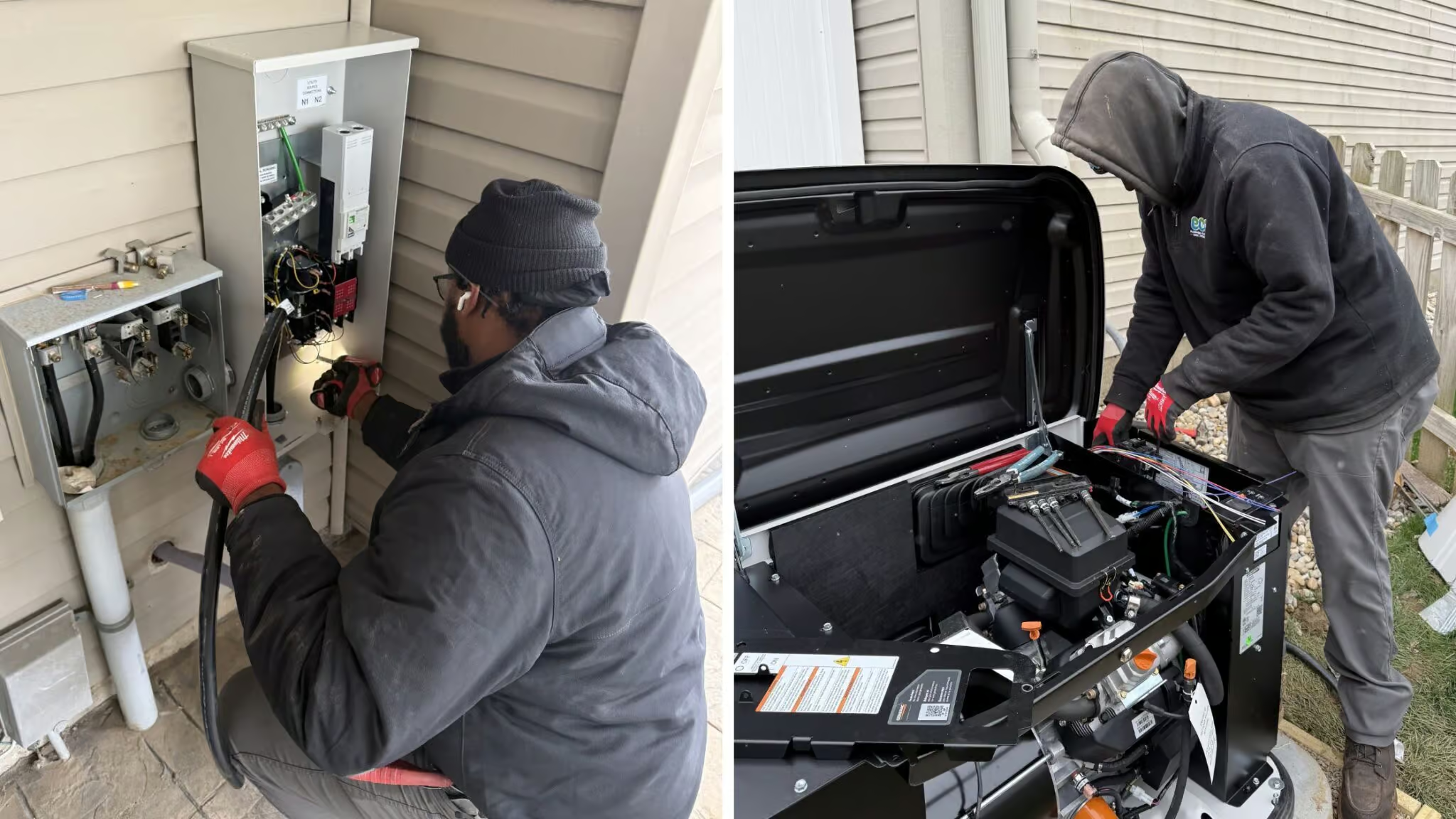 Once permits are approved and your generator has arrived, installation begins. Most standby generator installations take 1-3 days, depending on the complexity of your electrical system and fuel setup. This phase is where everything comes together, but several critical steps must happen before your system is fully operational.
Most manufacturers recommend servicing your standby generator every 6–12 months, or after a specified number of run hours, whichever comes first. Following this schedule not only extends the life of your system but also protects your manufacturer’s warranty.
We offer maintenance plans that include scheduled inspections, documented service records, and priority emergency response. Regular maintenance ensures your generator starts when it’s supposed to.
When properly maintained, a standby generator can provide dependable backup power for many years. Skipping service may save money in the short term, but it significantly increases the risk of failure when you need power most.
What to Expect During Your Standby Generator Consultation and On-Site Evaluation
When you call us for a standby generator quote, the process begins with a simple conversation. During this initial call, we gather basic information and book your on-site consultation, such as the year your home was built, who will be present for the appointment, and if you own and reside on the property. Once your appointment is scheduled, one of our technicians comes to your property to complete a full on-site assessment. This is where the detailed planning begins. Rather than guessing at sizing over the phone, we evaluate everything firsthand to ensure your standby generator is properly matched to your needs and your home’s infrastructure. We’ll ask a few preliminary questions to understand your situation, such as whether you want to power your entire home or just essential circuits, how frequently you experience outages, and whether your property uses natural gas or propane. This helps us prepare for the visit, but the real technical evaluation happens in person. During the on-site visit, our technician will:- Inspect your electrical panel and overall load capacity
- Evaluate available installation space and placement restrictions
- Measure the distance to the gas meter or propane tank
- Review local code requirements and clearance regulations
- Identify any necessary gas line upgrades
- Perform a formal load calculation to determine the proper generator size
What’s Included in a Standby Generator Installation Quote?
Your quote will clearly outline the generator model and size recommended for your home, along with all required components and labor. This typically includes the automatic transfer switch (ATS), electrical installation, any necessary gas line modifications, permit applications, inspection coordination, and warranty coverage. If applicable, we’ll also present optional maintenance plans to protect your investment long-term. When we review the quote with you, we’ll take the time to walk through it line by line so there’s complete clarity. We explain exactly what is included in the scope of work, identify any factors that could influence final pricing, outline the estimated installation timeline, and discuss any upgrades that may be required to meet current electrical or fuel code requirements. Our goal is full transparency so you understand not just the price, but the value and scope of work behind it.Typical Standby Generator Cost Range
Standby generator installation costs vary depending on generator size, fuel type, and site complexity. Below is a general pricing overview for residential installations:| Generator Size (kW) |
Typical Home Coverage |
Average Cost at Eco |
| 10–14 kW |
Essential circuits (partial home) |
$10,000-$12,900+ |
| 16–22 kW |
Most standard homes (whole-house for average size) |
$13,750-$14,900+ |
| 24–26 kW |
Larger homes or high electrical demand |
$15,250-$16,250+ |
What Affects Standby Generator Pricing?
Several variables determine where your installation falls within these price ranges, including the size and power output of the generator, whether your home uses natural gas or propane, and whether your electrical panel needs upgrades. Additional factors such as trenching for extended gas lines, local permit and inspection fees, and the inclusion of load management systems can also affect the overall cost. Because no two homes are exactly alike, the on-site evaluation allows us to build a quote based on your specific property, electrical demand, and code requirements. The result is an accurate proposal that reflects the true scope of work with a clear, predictable path from approval to installation.Standby Generator Installation Process: Timeline, Inspection, and Testing
Once permits are approved and your generator has arrived, installation begins. Most standby generator installations take 1-3 days, depending on the complexity of your electrical system and fuel setup. This phase is where everything comes together, but several critical steps must happen before your system is fully operational.
Preparing the Generator Installation Site
First, we prepare the installation site by setting the foundation level using a prepoured concrete base. This provides long-term stability and proper drainage. We then deliver and position the generator according to local code requirements, ensuring it meets clearance regulations from windows, doors, and property lines. In storm-prone areas, we secure and anchor the unit for additional protection.Electrical and Fuel Integration
Next comes the electrical and fuel integration. Our licensed electricians install the ATS switch, which allows your generator to detect a power outage and restore electricity automatically within seconds. We connect the generator to your main electrical panel and install load management modules if your system requires them. For natural gas or propane units, we extend or upgrade our gas lines, test fuel pressure, and verify that every connection meets safety standards.Inspection and Code Compliance
Once installation is complete, your system must pass inspection. We coordinate with local inspectors to verify electrical code compliance, proper grounding, safe fuel connections, and correct transfer switch wiring. If any corrections are required, we handle them promptly. Only after passing inspection is your standby generator cleared for activation.System Testing and Final Commissioning
After approval, we perform full system testing and commissioning. If the system does not perform perfectly, we address it before leaving. This step ensures your generator works exactly as intended before you ever need it during an emergency.What Happens After a Standby Generator Installation?
Once your standby generator is installed, inspected, and tested, we complete a thorough walkthrough with you. This step ensures you feel confident and fully informed about your new system. During the walkthrough, we explain:- How the automatic transfer switch works
- What the indicator lights and alerts mean
- How to manually start or shut down the generator if necessary
- What routine maintenance involves
- Who to contact if service is needed
Ongoing Standby Generator Maintenance: Protecting Your Investment
A standby generator is not a “set it and forget it” system. While it runs automatically during an outage, it still requires routine maintenance to remain reliable year after year. Like any engine-driven equipment, your generator contains moving parts, fluids, and electrical components that experience wear over time. Without regular service, performance can decline, and the last place you want to discover a problem is during a power outage. Routine standby generator maintenance typically includes:| Maintenance Task |
Recommended Timeframe |
Why It Matters |
| Oil & filter change |
Every 6-12 months or after 100-200 run hours |
Keeps engine components lubricated and prevents premature wear |
| Battery inspection & testing |
Every 6 months |
Ensures reliable startup during an outage |
| Coolant level check |
Every 6-12 months |
Prevents overheating and engine damage |
| Fuel system inspection |
Annually |
Identifies leaks, pressure issues, or fuel degradation |
| Air filter replacement |
Annually or as needed |
Maintains proper airflow and engine efficiency |
| Load testing (full system) |
Annually |
Confirms the generator performs properly under real demand |