

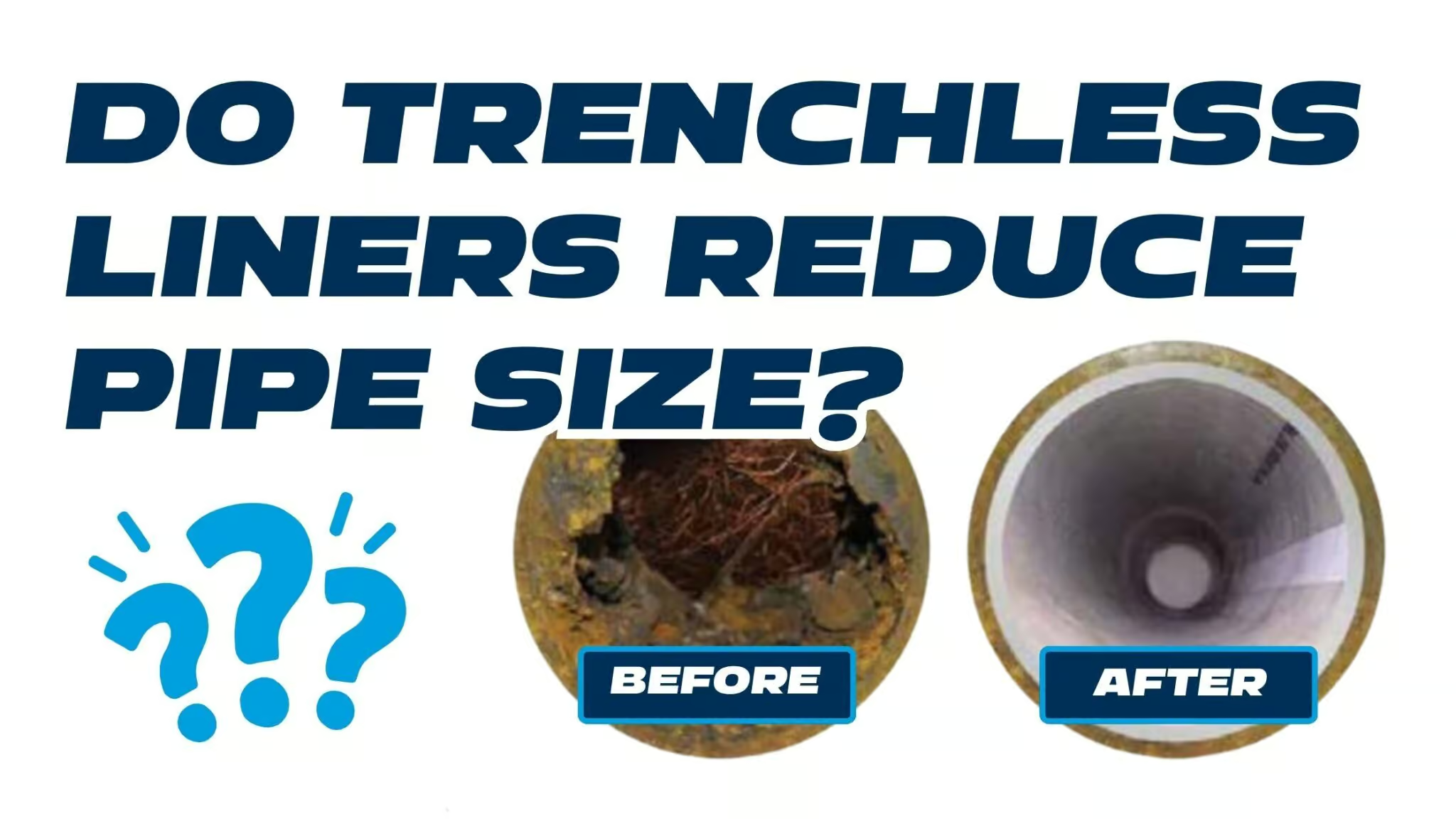
If you’re dealing with damaged sewer pipes, you’ve probably heard contractors recommend trenchless sewer lining as a modern repair option. But once you start researching it, one concern tends to come up quickly:
Does trenchless sewer lining make your pipe smaller, and could that cause problems later?
It’s a fair question. After all, the process involves installing a new liner inside your existing pipe. Logically, it seems like adding material inside would reduce the diameter, potentially impacting water flow, drainage efficiency, or even increasing the risk of clogs over time.
At the same time, trenchless technology has become one of the most widely recommended repair methods across plumbing, electrical, and HVAC services, especially among eco-conscious contractors, because it minimizes excavation, reduces environmental impact, and preserves your property.
At Eco Plumbers, Electricians, and HVAC Technicians, we work with homeowners every day to solve problems like this, combining hands-on field experience with a focus on efficient, long-term solutions. We’ve seen when trenchless lining is the right choice and when it is not.
So what’s the truth?
In this article, we’ll break it down clearly and honestly, including:
- Whether trenchless sewer lining actually reduces pipe diameter
- How much size change really occurs
- Whether that change affects performance or flow
- When trenchless lining is and is not the best solution
By the end, you’ll have a clear, experience-backed understanding of how trenchless sewer lining works and whether it’s the right choice for your home.
What Is Trenchless Sewer Lining?
Trenchless sewer lining (also called cured-in-place pipe lining or CIPP) is a method of repairing damaged sewer pipes by installing a resin-saturated liner inside the existing pipe.
Instead of excavating the entire sewer line, plumbers insert a flexible liner into the pipe through an access point such as a cleanout. Once inside, the liner is inflated and cured using heat, steam, or UV light. This process hardens the liner, creating a new pipe inside the old pipe.
The finished result is a seamless, durable pipe that:
- Seals cracks and leaks
- Prevents root intrusion
- Strengthens the damaged line
- Extends the life of the sewer system
Because it avoids major excavation, trenchless lining is often preferred for properties where digging would damage landscaping, driveways, sidewalks, or foundations.
But because a new layer is added inside the pipe, homeowners naturally wonder how it affects the pipe’s internal diameter.
Yes, Trenchless Sewer Lining Slightly Reduces Pipe Diameter
Yes, trenchless sewer lining technically reduces the inside diameter of your pipe, but only by a very small amount. Most liners are about 3–5 millimeters thick (roughly ⅛–¼ inch depending on the pipe size and material), while the sewer line itself is 6 inches in diameter. That means the pipe becomes slightly smaller after lining, but not by much.
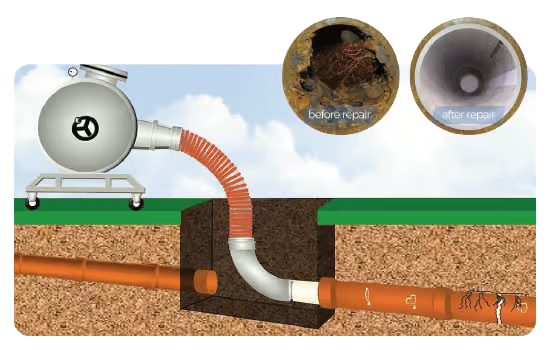
This reduction is so minimal that it typically has no negative impact on sewer flow. In fact, many lined pipes actually perform better than old pipes because the liner creates a smooth, seamless interior surface.
Why the Smaller Pipe Diameter Usually Doesn’t Affect Flow
While the pipe technically becomes smaller, several factors actually improve overall performance after lining.
The New Pipe Interior Is Much Smoother
Older sewer pipes often have rough interior surfaces caused by corrosion, mineral buildup, cracks, and root intrusion. These imperfections create friction and give debris places to catch, which can slow wastewater flow over time.
CIPP liners create a smooth interior surface that improves hydraulic efficiency, allowing water and waste to move through the pipe more easily. In many cases, this improved smoothness more than compensates for the small loss in diameter.
Debris and Roots are Eliminated
Before the liner is installed, plumbers thoroughly clean the pipe using methods like hydro jetting or mechanical cutting. This process removes common flow restrictions such as tree roots, grease buildup, scale deposits, and other obstructions.
Once the liner is installed and cured, these issues are sealed off and prevented from returning, which can significantly improve how well wastewater moves through the system.
Seamless Construction Reduces Future Blockages
Traditional sewer pipes are built with joints where pipe sections connect. Over time, these joints can shift, crack, or allow tree roots to grow inside the pipe.
Trenchless liners create a continuous, jointless pipe within the existing line. By eliminating these vulnerable connection points, the system becomes less susceptible to root intrusion and debris buildup, helping maintain consistent flow for years to come.
When Pipe Diameter Reduction Could Matter
Although trenchless lining works well in most situations, there are a few cases where pipe diameter reduction might be a concern.
Severely Collapsed Pipes
If a sewer pipe is significantly crushed, offset, or collapsed, it may not have enough structural integrity to support a liner.
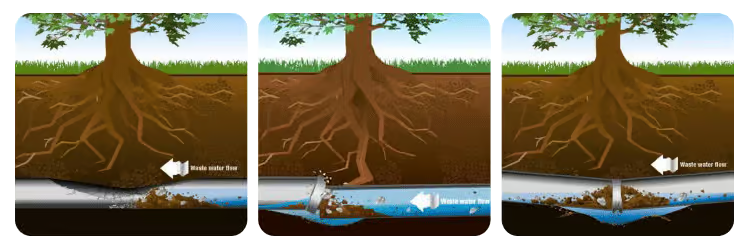
Trenchless lining relies on the existing pipe to act as a host for the new liner, so when the pipe has major structural damage, the liner may not properly form or hold its shape.
In these situations, traditional pipe replacement is usually the better solution to restore full pipe capacity and structural stability.
Already Undersized Sewer Systems
Some older homes were built with sewer lines that were installed with minimal capacity for the household’s wastewater needs. If the pipe is already undersized for modern water usage, even a small reduction in diameter could limit flow during heavy use.
A professional plumber can perform a sewer camera inspection and system evaluation to determine whether trenchless lining will still provide adequate capacity or if replacement with a larger pipe would be a better long-term solution.
Heavy Grease or Solid Waste Environments
Properties that generate large amounts of grease or solid waste, such as commercial kitchens, restaurants, or certain industrial facilities, often require maximum pipe capacity to prevent buildup and blockages.
In these environments, maintaining the largest possible pipe diameter can be more important for long-term performance. For this reason, plumbing professionals may evaluate whether lining or full pipe replacement is the more appropriate repair method.
Pros and Cons of Trenchless Sewer Liners
Before deciding if trenchless sewer lining is the right repair method for your home, it’s helpful to understand both the advantages and the potential limitations of this technology.
| Pros of Trenchless | Cons of Trenchless |
| Minimal excavation required | Not suitable for completely collapsed pipes |
| Faster installation | Slight reduction in pipe diameter |
| Long lifespan | May not work with severely misaligned pipes |
| Lower property restoration costs | Not ideal for certain structural damage |
In most cases, a sewer inspection is performed first to determine whether trenchless sewer lining is the best repair option for your specific situation.
Is Trenchless Sewer Lining Worth It For Your Sewer Repair?
If you came here wondering whether trenchless sewer lining reduces the size of your pipe, the short answer is yes, but only slightly. The liner adds a thin layer to the inside of your existing pipe, typically reducing the diameter by just a few millimeters.
However, as you’ve learned, that small change rarely causes problems. In many cases, the smoother interior surface, removal of debris and roots, and seamless construction actually improve the way wastewater flows through the pipe compared to an older, damaged line.
For most homeowners dealing with cracks, leaks, or root intrusion, the real issue is not pipe size. It is pipe deterioration. Trenchless sewer lining can restore your pipe without digging up your yard, driveway, or landscaping, while still providing a long-lasting repair.
The next step is determining whether your specific sewer line is a good candidate for trenchless repair. A professional sewer camera inspection can evaluate the condition of your pipes and help you decide whether trenchless lining, spot repair, or full replacement is the best solution.
If you are researching sewer repair options in Columbus, Dayton, Cincinnati, or Chillicothe, OH, a helpful next step is learning how trenchless sewer repair compares to traditional sewer replacement, so you can confidently choose the right solution for your home.