


What's Ahead
If you’re reading this, there’s a good chance you’ve either scheduled or are about to schedule a generator appointment with us. And if that’s the case, you’re probably already thinking about what happens next.
Maybe you’ve dealt with the effects and frustrations of power outages, like food going bad, your home becoming uncomfortable, or your daily routine getting completely disrupted. Now you’re taking the next step toward a solution, but a different kind of uncertainty has likely crept in.
At Eco Plumbers, Electricians, and HVAC Technicians, we’ve walked thousands of homeowners through this exact process, and we know that not knowing what to expect can make the experience feel more complicated than it needs to be.
The reality is, your generator appointment should be simple, informative, and tailored to your needs when it’s done right.
In this article, we’ll walk you through exactly what to expect during your generator appointment with us, including the key steps, who you’ll meet, what decisions you’ll make, and how to prepare so you can get the most out of your time.
Why the Generator Appointment Matters More Than You Think
A generator appointment is not just a quick sales visit. It is a critical evaluation of your home, your specific needs, and your long-term plan for reliable power. What happens during this time directly impacts whether your generator will perform the way you expect when an outage actually occurs.
During the appointment, one of our technicians takes a close look at your electrical system, how much power you use, and which parts of your home matter most during a blackout. They also evaluate installation logistics, including where the generator can be placed and what will be required to meet local codes and regulations.
This process is what ensures your system is designed correctly from the start.
If this step is rushed or overlooked, it can lead to real issues later on. Homeowners can end up with a generator that is too small to handle their needs or one that is unnecessarily large and expensive. In some cases, important installation details are missed, resulting in unexpected costs or delays due to permitting and compliance requirements.
Step 1: Initial Conversation About Your Needs
Your generator appointment will typically begin with a conversation, often at your kitchen table or another comfortable space in your home. This is not about jumping straight into products or pricing. It is about understanding your situation so the recommendation actually fits your needs.
This is where your generator expert focuses on learning about your wants and needs.
During this discussion, your technician will guide you through a series of questions to better understand your goals and concerns. Some questions we will ask are:
- Have you experienced frequent or recent power outages?
- What appliances or systems are must-haves during a blackout?
- Are you looking for whole-home backup or just essential coverage?
- Do you have a budget range in mind?
What you share in this moment directly shapes the solution you are presented with.
For example, someone looking to power their entire home will need a very different system than someone who only wants to keep essentials like a refrigerator, HVAC system, and a few lights running. Likewise, if your home relies on medical equipment or you work remotely, you may need a more robust and reliable setup.
Step 2: Home Assessment and Site Inspection
Next, your technician will walk your property to evaluate whether the generator can be installed safely and effectively. This step is all about feasibility, making sure everything works not just in theory, but in your specific home and layout.
This is what ensures your generator can be installed safely, legally, and without unexpected complications. During this part of the appointment, the technician will assess several key factors, including:
- The location of your electrical panel
- Access to a gas line, if applicable
- Required distance from your home for code compliance
- Available space for the generator unit
- Noise considerations based on placement
- Drainage and ground stability
This is also the stage where many homeowners encounter their first surprises.
For example, generators must meet strict clearance requirements that limit where they can be placed. In some cases, local regulations or homeowners’ associations require permits or approvals before installation can begin. Additionally, if your home has an older electrical panel, it may need to be upgraded to support the new system.
This step often uncovers hidden costs or constraints early in the process, which is a good thing! It allows you to address any issues upfront, rather than running into delays or unexpected expenses later during installation.
Step 3: Load Calculation and System Sizing
One of the most important parts of your appointment is determining how much power your home actually needs during an outage. A properly sized generator is the difference between dependable backup power and ongoing frustration when it matters most.
To get this right, your specialist will take a closer look at your home’s electrical setup and usage. This typically includes:
- Reviewing your electrical panel
- Calculating your home’s wattage requirements
- Discussing load management options if needed
From there, you’ll be guided toward one of two common approaches:
Approach | What It Powers | Key Benefits | Considerations |
Whole-Home Generator | The entire home automatically | Maximum convenience and seamless transition during outages | Higher upfront investment and a larger system are required |
Essential Circuits Only | Key systems like the refrigerator, HVAC, lights, and outlets | More cost-effective and efficient for basic needs | Limited coverage, requires prioritization of what matters most |
The goal of this step is to align your expectations with reality. This ensures you are not overpaying for more capacity than you need, while also avoiding the risk of choosing a system that falls short when you rely on it most.
Step 4: Product Recommendations and Options
Once your needs, constraints, and power requirements are clear, your generator expert will begin recommending specific systems that fit your situation.
This is the point where your appointment shifts from discovery to decision-making. You’ll start comparing options based on performance, features, and overall investment. Depending on your needs, this may include:
- Generator brands such as Generac
- Different power output levels
- Fuel types like natural gas or propane
- Automatic versus manual systems
- Warranty coverage and support
Your technician will walk you through multiple solutions and take the time to explain the differences in a way that makes sense. You should come away with a clear understanding of the pros and cons of each option, along with honest insight into long-term maintenance requirements and realistic expectations for how long your system will last.
Step 5: Transparent Pricing and Quote Review
After your needs and options have been clearly defined, you will receive a detailed quote for your generator system. Your quote will include all of these things into the price:
- Equipment cost
- Installation labor
- Electrical upgrades, if needed
- Permits and inspections
- Ongoing maintenance plans
While you’re reviewing your quote, your technician may have touched on these questions already, but if not, be sure to ask them.
- What could cause this price to change?
- Are there financing options available?
- What is included versus not included?
- How does this compare to other systems discussed?
- Other questions you might have thought of during this process
Step 6: What Happens If You Move Forward
If you decide to move forward with installation, your technician will clearly walk you through what happens next so there are no surprises along the way. Here’s what you can expect for next steps:
- The permitting timeline and any approvals required
- Ordering and delivery of your generator equipment
- Scheduling your installation date
- The final inspection and system testing process
While every project is a little different, most generator installations take between two and six weeks from start to finish, depending on permitting timelines and equipment availability.
Knowing what to expect at this point helps you plan ahead and avoid unnecessary frustration. When the process is clearly communicated, you can move forward with confidence, understanding exactly how and when your backup power solution will be in place.
How to Prepare for Your Generator Appointment
To get the most value from your appointment, it helps to become prepared. A little upfront thought can lead to better recommendations, fewer surprises, and a more productive conversation overall.
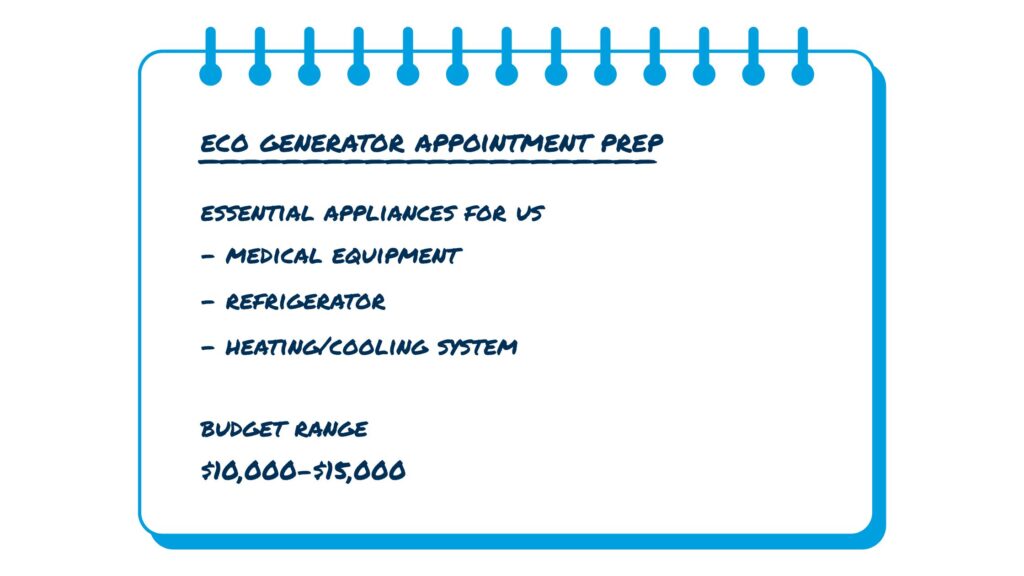
Before your appointment, take some time to think through what matters most to you. This includes identifying the appliances and systems you consider essential during a power outage, and having a general idea of your budget range. You can get an idea of what you could expect to pay using our online estimator!
Make Your List
It is also important to make sure your electrical panel is easily accessible so your technician can evaluate it without delays.
There are a few additional steps that are not required but can be helpful. Bringing recent utility bills can provide insight into your energy usage, and noting any existing electrical issues in your home can help your specialist identify potential challenges early.
The more information you can provide, the more accurate and tailored your generator solution will be.
What Comes Next After Your Appointment?
At the end of the day, scheduling a generator appointment usually comes after dealing with the frustration and uncertainty of power outages. You may have started this process unsure of what would happen during the visit or whether it would actually help you make a confident decision.
Now, you have a clear understanding of what the appointment involves, from the initial conversation and home assessment to system sizing, recommendations, pricing, and what happens if you choose to move forward. You are no longer walking into this process blindly. You know what to expect and how each step helps ensure you get the right solution for your home.
As you prepare for your appointment, your next step is to deepen your understanding of what happens after you say yes. The installation process is just as important as the appointment itself, and knowing what to expect there will help you feel even more confident in your decision.
At Eco Plumbers, Electricians, and HVAC Technicians, we are committed to making every step of this process clear, honest, and tailored to your needs.
Your next step is to read our blog, “Standby Generator Installation Explained,” so you can fully understand what happens after your appointment and how your system comes to life.
FAQs
Do I need to be home for the entire generator installation process?
In most cases, you will need to be present at the beginning of the installation to give access and review final details, but you may not need to be home for the entire process. Your installer will let you know what’s required based on the scope of work and any inspections.
How often does a standby generator need maintenance after installation?
Standby generators require regular maintenance to ensure they work when you need them. This typically includes annual servicing, oil changes, filter replacements, and periodic system checks. Some homeowners choose a maintenance plan to keep everything on schedule.
Will a generator increase my home’s value?
In many cases, yes. A professionally installed standby generator can increase your home’s appeal to buyers, especially in areas prone to outages. While the exact return on investment varies, many homeowners see it as both a convenience and a long-term asset.