

What's Ahead
A clogged shower drain before work. A toilet that keeps running and drives up your water bill. A sewer backup that suddenly turns your day upside down. Plumbing problems rarely happen at a convenient time, and when they do, they can quickly become stressful, messy, and expensive.
If you’re like many Columbus homeowners, you’ve probably wondered whether the issue you’re experiencing is common, what caused it, and whether it’s something you can address yourself or if it’s time to call a plumber.
At Eco Plumbers, Electricians, and HVAC Technicians, we’ve helped homeowners throughout Central Ohio solve plumbing problems for years. By analyzing local service data from May 2025 through May 2026, we identified the plumbing issues Columbus residents faced most often. The results offer a valuable look at the challenges homeowners encounter every day.
The three most common plumbing calls in Columbus during that period were:
- Clogged Drains in Toilets, Showers, and Sinks
- Toilet Repairs Unrelated to Clogs
- And Clogged Sanitary Sewer Lines
In this article, you’ll learn what causes these plumbing problems, the warning signs to watch for, and what you can do to prevent small plumbing issues from becoming costly repairs.
The Three Most Common Plumbing Calls in Columbus
Based on our service data from May 2025 through May 2026, three plumbing issues stood out as the most common reasons Columbus homeowners contacted a plumber. While plumbing systems can experience a wide range of problems, these three categories accounted for thousands of service calls across Central Ohio.
Plumbing Issue | Calls Ran |
Drain Clogged (Toilet, Shower, Sink) | 3,121 |
Toilets (Not Clogged) | 2,514 |
Drain Clogged (Sanitary Sewer) | 2,043 |
What do these numbers tell us? Most plumbing problems homeowners face involve drainage issues, toilet malfunctions, or sewer line blockages. Understanding why these problems occur can help you identify issues earlier and potentially avoid more expensive repairs.
Let’s take a closer look at each of these common plumbing calls and what Columbus homeowners should know about them.
#1 Clogged Drains in Toilets, Showers, and Sinks
Clogged drains were the most common plumbing issue Columbus homeowners experienced from May 2025 through May 2026, with 3,121 calls that our team ran.
That includes slow-draining showers, backed-up sinks, and toilets that will not flush the way they should. While a single clog may seem minor at first, repeated drain problems can point to buildup deeper in your plumbing system.
Why Do Drains Get Clogged?
Drain clogs usually happen when materials collect inside the pipe and restrict water flow. The exact cause depends on the fixture.
Common Causes of Sink Clogs
- Grease and cooking oils
- Food scraps
- Coffee grounds
- Soap residue/scum
- Mineral buildup
- Toothpaste buildup
- Cosmetic products
- Hair
Common Causes of Shower Drain Clogs
- Hair accumulation
- Soap residue
- Hard water deposits
- Small debris washed down the drain
Over time, these materials stick to the inside of the pipe. As the buildup grows, water drains more slowly until the line becomes partially or fully blocked. This can happen to any drain, but is most common with shower drains.
Common Causes of Toilet Clogs
- Too much toilet paper
- Flushable wipes (are not actually flushable!)
- Feminine hygiene products
- Children’s toys
- Paper towels or tissues
Warning Signs of a Clogged Drain
Slow drainage, standing water, gurgling sounds, unpleasant odors, or water backing up into another fixture can all indicate a drain clog. Addressing the problem early can help prevent a minor blockage from turning into a more significant plumbing repair.
Can You Fix a Clogged Drain Yourself?
Some minor clogs can be cleared with a plunger, a drain snake, or by removing visible debris near the drain opening. However, if the clog keeps returning, multiple drains are affected, or water is backing up elsewhere in your home, the blockage may be deeper in the plumbing system. In those cases, professional drain cleaning is often the most effective solution.
#2 Toilet Repairs (Not Clogged)
Toilet repairs were the second most common plumbing service Columbus homeowners needed from May 2025 through May 2026, accounting for 2,514 calls our team ran.
While many people associate toilet problems with clogs, a toilet can stop functioning properly for several other reasons. Like any plumbing fixture, toilets contain moving parts that wear out over time and eventually need repair or replacement.
Why Do Toilets Stop Working Properly?
Most non-clog toilet issues occur when one of the toilet’s internal components begins to fail. These parts control how water enters, exits, and refills the tank after each flush.
Common Causes of Toilet Repairs
- Running toilets
- Constant refilling
- Weak flushing
- Water is leaking into the bowl
- Leaks around the base
- Broken handles
- Faulty fill valves
- Worn flappers
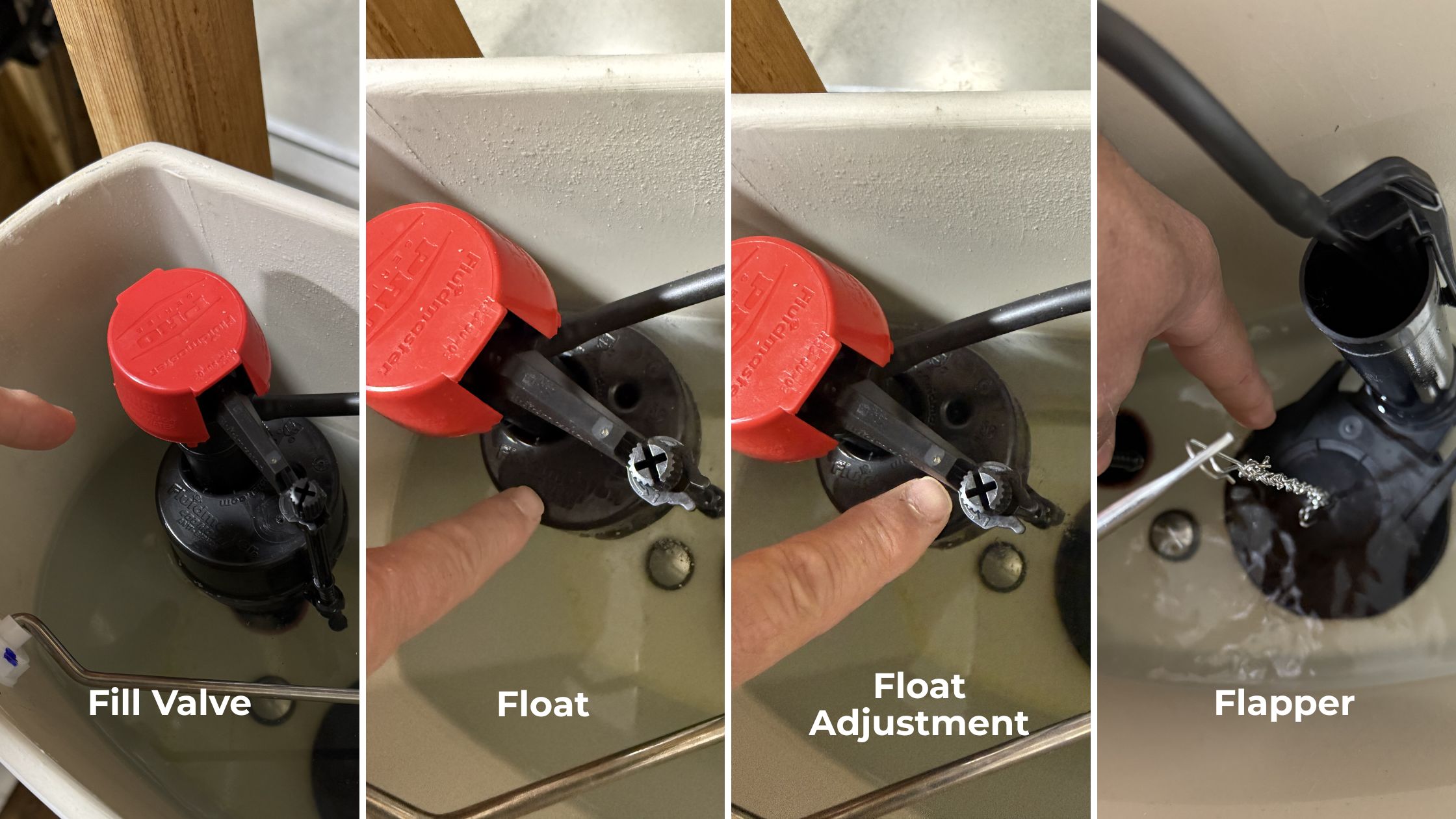
A running toilet is one of the most frequent issues homeowners experience. In many cases, the problem is caused by a worn flapper, a faulty fill valve, or an improperly adjusted float. When these components fail, water continuously moves through the tank, which can waste hundreds of gallons of water each month.
Warning Signs of a Toilet Problem
A toilet may need repair if it runs constantly, cycles on and off when not in use, flushes weakly, leaks around the base, or makes unusual noises after flushing. Addressing these issues early can help prevent water waste, higher utility bills, and potential water damage.
Can You Fix a Toilet Problem Yourself
Some toilet repairs can be handled by replacing simple components such as a flapper, fill valve, or handle. However, if the issue persists, leaks continue, or you’re unsure what is causing the problem, a professional plumber can diagnose the issue and recommend whether repair or replacement is the better long-term solution.
#3 Clogged Sanitary Sewer Lines
Clogged sanitary sewer lines were the third most common plumbing issue Columbus homeowners faced from May 2025 through May 2026, accounting for 2,043 calls our team ran.
Unlike a clogged sink, shower, or toilet, a sewer line blockage can affect your home’s entire plumbing system. When wastewater cannot flow through the main sewer line, it can back up into drains, tubs, and other fixtures throughout the house.
What Is a Sanitary Sewer Line?
A sanitary sewer line is the main pipe that carries wastewater away from your home. It collects water from fixtures and appliances such as toilets, sinks, showers, bathtubs, washing machines, and dishwashers before transporting it to the municipal sewer system or a septic tank.
Common Causes of Sewer Line Clogs
Sewer line blockages can occur for several reasons, but some of the most common causes include:
- Tree root intrusion
- Grease buildup
- Flushable wipes and other debris
- Aging or damaged pipes
Tree roots are one of the leading causes of sewer line problems. As roots search for moisture, they can enter small cracks or loose joints in underground pipes and continue growing inside the line.
Grease is another common culprit. Over time, fats, oils, and grease can harden inside the pipe and restrict wastewater flow.
Items such as wipes, paper towels, hygiene products, and cotton swabs can also accumulate inside the sewer line and create serious blockages.
In some cases, the issue is caused by aging infrastructure. Older sewer lines may be more vulnerable to corrosion, deterioration, collapse, and shifting pipe sections.
Warning Signs of a Sewer Line Problem
A sewer line blockage may be developing if you notice multiple drains backing up at the same time, toilets gurgling when other fixtures are used, sewage odors inside the home, water backing up into tubs or showers, or slow drainage throughout the house. If several plumbing fixtures are experiencing problems simultaneously, the issue may be occurring in the main sewer line rather than an individual drain.
Can You Fix a Sewer Line Yourself?
Unlike many sink or toilet clogs, sewer line blockages typically require professional diagnosis and repair. Plumbers often use specialized tools such as sewer camera inspections, hydro jetting equipment, and mechanical root removal systems to locate and clear the obstruction. If the pipe has been damaged, sewer repair or replacement may also be necessary.
Because sewer backups can lead to property damage, unsanitary conditions, and costly repairs, it’s important to address suspected sewer line issues as quickly as possible.
Why These Plumbing Problems Are So Common in Columbus
Several local factors contribute to drain clogs, toilet issues, and sewer line problems throughout Central Ohio.
Older Homes Often Have Aging Plumbing Systems
Many Columbus-area neighborhoods feature homes that are several decades old. As plumbing systems age, they become more susceptible to pipe corrosion, sewer line deterioration, and fixture wear and tear. Over time, these issues can increase the likelihood of recurring repairs and plumbing failures.
Ohio Weather Can Put Stress on Pipes
Central Ohio’s freeze-thaw cycles can take a toll on plumbing systems. As temperatures fluctuate throughout the year, pipes and plumbing connections can expand and contract, potentially leading to leaks, shifting pipes, and drainage issues.
Hard Water Can Cause Buildup Inside Pipes
Many homeowners in the Columbus area deal with hard water. Over time, minerals in the water can accumulate inside pipes and plumbing fixtures, restricting water flow and reducing the overall efficiency of the plumbing system.
Tree Roots Can Damage Sewer Lines
Mature trees are common throughout many established Columbus neighborhoods like Upper Arlington, Bexely, and Worthington. As roots search for moisture, they can enter small cracks or loose joints in aging sewer lines. Once inside, they continue growing and can eventually create significant blockages that require professional repair.
While homeowners cannot control many of these factors, understanding them can help explain why drain clogs, toilet repairs, and sewer line issues remain some of the most common plumbing problems in the Columbus area.
How Homeowners Can Reduce Plumbing Problems
While not every plumbing issue can be avoided, a few simple habits can reduce the likelihood of drain clogs, toilet repairs, and sewer line blockages.
Protect Your Drains
Many drain clogs develop gradually as grease, food particles, soap residue, hair, and other debris build up inside the pipe. Avoid pouring grease down kitchen drains, use drain strainers where possible, and dispose of food waste properly to help keep drains flowing freely.
Be Mindful of What You Flush
Toilets are designed to handle human waste and toilet paper. Items such as wipes, paper towels, hygiene products, and cotton swabs may seem harmless, but they can contribute to clogs in both household drains and sewer lines. When in doubt, it’s usually safer to throw it away rather than flush it.
Schedule Routine Plumbing Inspections
Many plumbing problems start long before homeowners notice symptoms. Periodic inspections can help identify drain buildup, aging fixtures, hidden leaks, and potential sewer line concerns before they develop into larger and more expensive repairs.
Address Small Problems Before They Get Worse
A slow drain, running toilet, or unusual plumbing noise may not seem urgent, but these early warning signs often indicate an underlying issue. Taking care of small plumbing problems early can help prevent unexpected breakdowns, water damage, and costly emergency repairs later on.
What These Common Plumbing Calls Mean for Columbus Homeowners
Plumbing problems are an inevitable part of homeownership, but understanding the most common issues can help you respond before they become costly emergencies. Whether it’s a clogged drain, a malfunctioning toilet, or a sewer line blockage, recognizing the warning signs early can make a significant difference.
If you’ve been dealing with slow drains, rising water bills, recurring clogs, or unusual plumbing behavior, you’re not alone. As the data shows, these are some of the most common plumbing challenges homeowners face throughout the Columbus area.
Now that you have a better understanding of what causes these issues and how to spot them, your next step is learning how to determine whether a plumbing problem can be repaired or if replacement is the smarter long-term investment. Understanding your options can help you make a more informed decision when problems arise.
At Eco Plumbers, we help homeowners throughout Central Ohio diagnose plumbing issues, evaluate repair and replacement options, and find solutions that fit their home’s needs. If you’re experiencing any of the problems discussed in this article, our team is here to help you identify the cause and recommend the best path forward.
FAQs
Why do my plumbing problems seem to happen during the winter?
Cold temperatures can put additional stress on your plumbing system. As temperatures fluctuate, pipes can expand and contract, increasing the risk of leaks and other plumbing issues. Winter is also when homeowners tend to use more hot water and spend more time indoors, which can place greater demand on plumbing fixtures and drains.
How often should I have my plumbing system inspected?
Most homeowners can benefit from a professional plumbing inspection every one to two years. Regular inspections can help identify hidden leaks, drain buildup, aging fixtures, and potential sewer line concerns before they develop into more expensive repairs. Older homes or properties with recurring plumbing issues may benefit from more frequent inspections.
Are older homes more likely to experience plumbing problems?
Yes. Older homes often have aging pipes, fixtures, and sewer lines that are more susceptible to corrosion, deterioration, and wear. While age alone does not guarantee plumbing issues, homeowners in older properties may experience a higher likelihood of drain clogs, leaks, sewer line problems, and fixture failures compared to newer homes.