


If you’ve started pricing a new HVAC system, you’ve probably felt the shock almost immediately. You expected a few thousand dollars, but instead you’re staring at estimates for $12,000, $18,000, even $25,000 or more. Now you’re wondering:
Why does one system cost $6,000 while another costs three times that?
Are contractors padding their prices, or is there something I’m missing?
When you’re making an investment this large, uncertainty feels risky. You don’t want to overspend, but you also don’t want to choose the cheapest option and regret it for the next 15 years.
At Eco Plumbers, Electricians, and HVAC Technicians, we’ve helped thousands of homeowners evaluate HVAC estimates, compare systems side by side, and understand exactly what drives price differences between installations. Through that experience, we’ve seen firsthand that two systems that look nearly identical on paper can vary dramatically in cost and be able to differentiate when a higher price is justified.
HVAC systems are expensive for eight primary reasons.
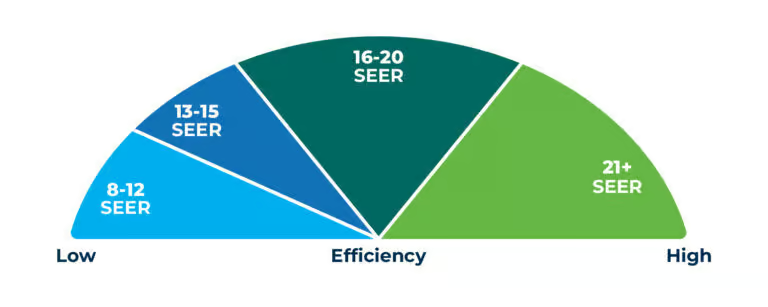 Higher-efficiency systems are more expensive because they use advanced technology like variable-speed compressors, upgraded blower motors, improved heat exchangers, and more sophisticated electronics.
The tradeoff is energy savings. In extreme climates, higher efficiency can significantly reduce monthly utility bills and offset the added cost over time. In milder climates, however, it may not be worth it.
Higher-efficiency systems are more expensive because they use advanced technology like variable-speed compressors, upgraded blower motors, improved heat exchangers, and more sophisticated electronics.
The tradeoff is energy savings. In extreme climates, higher efficiency can significantly reduce monthly utility bills and offset the added cost over time. In milder climates, however, it may not be worth it.
- Efficiency Ratings
- System Size
- Advanced Features
- Installation Complexity
- Ductwork Condition
- Brand Differences
- Labor Standards
- Industry-wide Cost Changes
8 Reasons Why HVAC Systems Can Get So Expensive
HVAC installation costs can increase for several reasons, including higher efficiency ratings, larger system sizes, advanced features, installation difficulty, ductwork condition, labor quality, and recent industry-wide price increases. To help you make sense of your estimate, let’s take a closer look at how each of these factors can affect the final price.1. Higher Efficiency Ratings Increase HVAC Costs
One of the biggest price differences between HVAC systems comes down to efficiency. Air conditioners are rated by SEER2 (Seasonal Energy Efficiency Ratio 2), furnaces by AFUE (Annual Fuel Utilization Efficiency), and heat pumps carry similar performance ratings. In simple terms, higher numbers mean better efficiency, which in turn is a higher upfront cost.
Higher-efficiency systems are more expensive because they use advanced technology like variable-speed compressors, upgraded blower motors, improved heat exchangers, and more sophisticated electronics.
The tradeoff is energy savings. In extreme climates, higher efficiency can significantly reduce monthly utility bills and offset the added cost over time. In milder climates, however, it may not be worth it.
2. Bigger Homes Require Larger, More Expensive HVAC Systems
HVAC systems are not one-size-fits-all. They’re sized based on your home’s square footage, insulation, ceiling height, window exposure, and overall layout. For example, a 1,200-square-foot home might only need a 2-ton air conditioner, while a 3,000-square-foot home could require a 5-ton system, a large furnace, and possibly even zoning equipment to maintain consistent temperatures throughout the house. Large systems cost more because they require bigger components, more refrigerant, and additional installation labor. However, bigger is not better. Oversizing an HVAC system can create serious performance issues, including short cycling (turning on and off too frequently), higher indoor humidity, uneven temperatures, and a shorter system lifespan. That’s why proper sizing matters. A reputable contractor will perform a Manual J® load calculation to determine exactly what your home needs before recommending equipment. This means evaluating factors like square footage, insulation, windows, climate, and air leakage to estimate how much heating and cooling your home requires.3. Variable-Speed and Smart Technology Add Cost
Modern HVAC systems are far more advanced than they were 10–15 years ago. Today, homeowners can choose equipment with variable-speed compressors, multi-stage heating and cooling, smart thermostats, humidity control, and even zoning capabilities. A basic single-stage system is the most affordable option and simply turns on and off at full power. In contrast, variable-speed systems can adjust output and run for longer periods at lower speeds. This allows them to maintain more consistent temperatures, control humidity more effectively, and operate more quietly. These comfort and performance upgrades increase the upfront cost, but they significantly improve how your home feels day to day. Ultimately, the decision comes down to whether you want basic heating and cooling or a more refined, optimized indoor comfort experience.4. Installation Complexity Drives Up Price
One thing many homeowners don’t realize is that installation quality often matters more than the brand of equipment you choose. Two identical HVAC systems can vary by thousands of dollars depending on what’s required to install them properly. Costs increase when ductwork needs modification, the electrical panel requires upgrades, the equipment location is difficult to access, refrigerant lines must be replaced, or local code updates need to be addressed. If your home has aging ductwork, poor airflow design, or shortcuts from a previous installation, correcting those issues will raise the project cost, but it will also protect your comfort, efficiency, and system lifespan. On the other hand, cheap installation often leads to reduced efficiency, ongoing comfort problems, and premature system failure. In HVAC, how it’s installed is just as important as what is installed.5. Ductwork Repairs or Replacement Add Thousands
Your HVAC system relies on ductwork to distribute air throughout your home. If those ducts are leaking, poorly insulated, improperly sized, damaged, or filled with debris, your system cannot operate at peak efficiency, no matter how new the equipment is. When ductwork needs to be repaired, redesigned, or fully replaced, it can add $2,000–$10,000 or more to the total project cost. That’s a significant increase, but ignoring duct issues can waste 20–30% of your system’s efficiency and lead to ongoing comfort problems. At the end of the day, your HVAC system is only as good as the air delivery system connected to it.6. Brand Reputation and Warranty Coverage Affect Price
Not all HVAC brands are priced the same. Premium brands typically cost more because they offer longer warranty coverage, proprietary technology, stricter manufacturing standards, and certified dealer networks. That said, a higher price tag does not automatically mean better performance in your home. In most cases, what matters more than the logo on the equipment is:- Proper system sizing
- Quality of installation
- Ongoing maintenance
7. The HVAC Company You Choose Impacts the Cost
When you invest in a new HVAC system, you’re not just paying for equipment; you’re paying for the company responsible for installation and accountability if something were to go wrong. Your estimate reflects the costs that reputable HVAC companies need to operate professionally. This includes licensed technicians, liability insurance, workers’ compensation coverage, permits, code compliance, and ongoing technical training. Established companies also invest heavily in certifications, safety standards, and proven installation procedures to ensure your system is installed properly and performs as expected. If one bid comes in significantly lower than the others, it’s worth asking why. Some companies reduce costs by cutting corners on insurance coverage, skipping permits, avoiding proper load calculations, or rushing installation practices.8. Inflation and Refrigerant Changes Have Increased Prices
In recent years, HVAC prices have increased due to broader economic and industry changes. Ongoing supply chain disruptions and rising material costs have driven up manufacturing expenses across the board. At the same time, the industry is transitioning away from older refrigerants like R-410A due to federal regulations. Because of this, manufacturers are required to move to newer refrigerants, meaning homeowners can’t simply choose older, cheaper refrigerant options when installing a new HVAC system. While these changes improve efficiency and environmental impact, homeowners are ultimately seeing the effects reflected in today’s installation estimates.When Is an Expensive HVAC System Worth It?
A higher-priced HVAC system isn’t automatically better, but in certain situations, it absolutely makes sense. A more expensive system is often worth it if- You plan to stay in your home for 10 years or more
- You live in an extreme climate with heavy heating or cooling demands
- Energy efficiency savings will offset the higher upfront cost
- Indoor comfort (humidity control, even temperatures, quiet operation) is a top priority
- Your ductwork or airflow system needs significant upgrades, along with your HVAC system
- You’re planning to sell your home soon
- You live in a mild climate
- Your budget is tight
- You’re comfortable with basic, single-stage equipment
How to Protect Yourself When Comparing HVAC Prices
If you’re seeing wide price differences between quotes, don’t just focus on the bottom-line number. The key is understanding what’s included versus what isn’t. When speaking with each contractor, ask questions like:- Did you perform a Manual J® load calculation to properly size the system?
- Is ductwork modification or replacement included in this estimate?
- What efficiency ratings are included for the equipment?
- What warranties apply to both parts and labor?
- If something fails in year five, what will I be responsible for paying?
- Are permits and inspections included?
- What is specifically excluded from this quote?