


What's Ahead
If you’re reading this, there’s a good chance you’ve either scheduled or are about to schedule an HVAC appointment with us. And if that’s the case, you’re probably already wondering what happens next.
At Eco Plumbers, Electricians, and HVAC Technicians, we’ve guided hundreds of Ohio homeowners through this exact process, and we understand that not knowing what to expect can make the experience feel more stressful than it needs to be.
The reality is, your HVAC appointment should be simple, informative, and tailored to your needs when it’s done right.
In this article, we’ll walk you through exactly what to expect during your HVAC appointment, including the key steps, who you’ll meet, what decisions you may need to make, and how to prepare so you can get the most out of your time.
Why the HVAC Appointment Matters More Than You Think
An HVAC appointment is not just a quick visit to take a look. Many homeowners worry the technician is searching for problems to upsell. A quality visit should feel different. It is a clear, honest evaluation of your home, your comfort needs, and your system’s performance. At Eco, the goal is to give you straightforward recommendations, even if that means a simpler, less expensive option. What happens during this time directly impacts your comfort, efficiency, and overall costs.
During the appointment, your technician evaluates your system, identifies any issues, and determines the best path forward. If this step is rushed or incomplete, it can lead to bigger problems later, such as misdiagnosed issues that keep coming back, unnecessary repairs or replacements, or systems that are inefficient or improperly sized.
A thorough appointment helps ensure you get the right solution the first time.
Step 1: Initial Conversation About Your Needs

Your HVAC appointment will typically begin with a conversation, often at your kitchen table or wherever you’re most comfortable. This is about understanding your situation so the solution actually fits your needs.
Your technician will ask questions like:
- What issues are you currently experiencing?
- When did the problem start?
- Have you noticed uneven temperatures or higher energy bills?
- Has your system been serviced regularly?
- Are you looking for a repair, routine maintenance, or considering replacement?
What you share here directly shapes the direction of the appointment. For example:
- A repair visit may focus on diagnosing a specific issue
- A maintenance visit will center on system performance and prevention
- An installation consultation will focus on long-term comfort and system options
- An emergency visit prioritizes restoring comfort as quickly as possible
Step 2: System Inspection and Home Evaluation
Next, your technician will inspect your HVAC system and evaluate how it’s performing in your home.
This step ensures everything works not just in theory, but in your specific environment. During this process, they may assess:
- Your furnace, air conditioner, or heat pump
- Thermostat functionality and settings
- Airflow and ductwork condition
- Filter condition and overall system cleanliness
- Electrical components and safety controls
What happens during your HVAC appointment will depend on the type of service you’ve scheduled:
- Repair: Focused diagnostic testing to pinpoint the issue
- Maintenance: Full system clean and performance check
- Installation: Evaluation of your home’s layout, insulation, and ductwork
- Emergency: Rapid diagnosis with priority on immediate safety and function
This is often where hidden issues are uncovered, such as worn components, airflow restrictions, or aging equipment.
Step 3: Diagnosis, Testing, and System Performance Review
Once the inspection is complete, your technician will explain what they found and how it impacts your system. By the end of this conversation, you should have a clear understanding of what’s working properly, what isn’t working (and why), and what could become a problem in the near future.
For repair or emergency visits, this includes a clear diagnosis of the issue.
For maintenance visits, this includes performance insights and recommendations to improve efficiency and extend system life.
For installation consultations, this may include load calculations, system sizing considerations, and a discussion around efficiency ratings and long-term performance expectations.
Step 4: Recommendations and Your Options
Once your technician understands your system and your needs, they’ll walk you through your options. This is where your appointment shifts from discovery to decision-making. Depending on your situation, this could include:
- Repair options (minor vs. major fixes)
- Maintenance recommendations
- System replacement options
- Efficiency upgrades or indoor air quality solutions
You may also discuss:
A good technician will explain these options clearly, without pressure, so you can choose what makes the most sense for your home and budget.
Step 5: Transparent Pricing and What It Includes
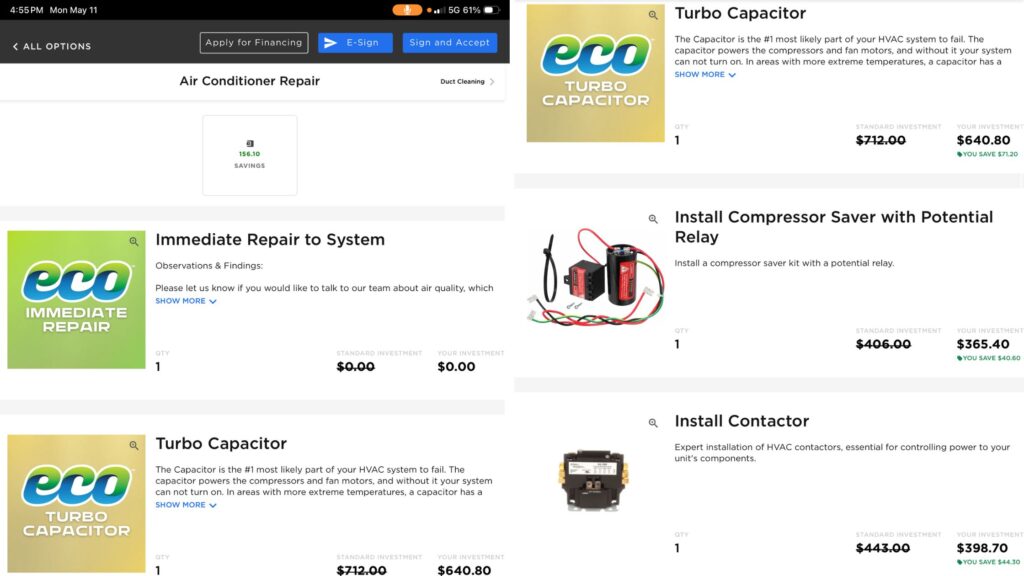
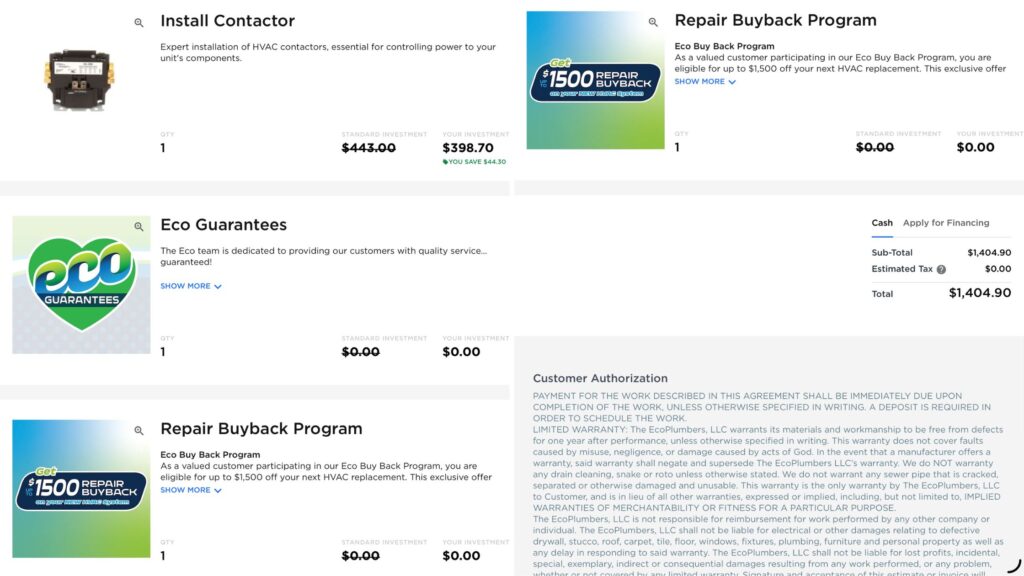
After reviewing your options, you’ll receive clear pricing for the recommended work. Your estimate should go beyond a single number and explain exactly what you’re paying for, such as:
- Parts and labor
- Diagnostic fees (if applicable)
- Maintenance services
- Equipment costs (for replacements)
- Any additional work required
While you’re reviewing your quote, your technician may have touched on these questions already, but if not, be sure to ask them.
- What could cause this price to change?
- Are there financing options available?
- What’s included—and what’s not?
- How urgent is this issue?
Step 6: What Happens If You Move Forward
If you decide to move forward, your technician will walk you through the next steps so you know exactly what to expect. Depending on the type of appointment:
Repair or Emergency
- Work may be completed the same day
- Parts may need to be ordered if unavailable
Maintenance
- Service is usually completed during the visit
- You may discuss ongoing maintenance plans
Installation or Replacement
- Scheduling your installation date
- Ordering equipment
- Preparing your home for installation
- Final testing and system walkthrough
Knowing what comes next helps you plan ahead and feel confident in your decision.
How to Prepare for Your HVAC Appointment
A little preparation can make your appointment more productive and efficient.
Before your technician arrives, make sure your HVAC system is easily accessible, and take some time to write down any issues or concerns you’ve noticed. Be ready to describe when and how problems occur, and have a general idea of your budget, if applicable.
Make Your List
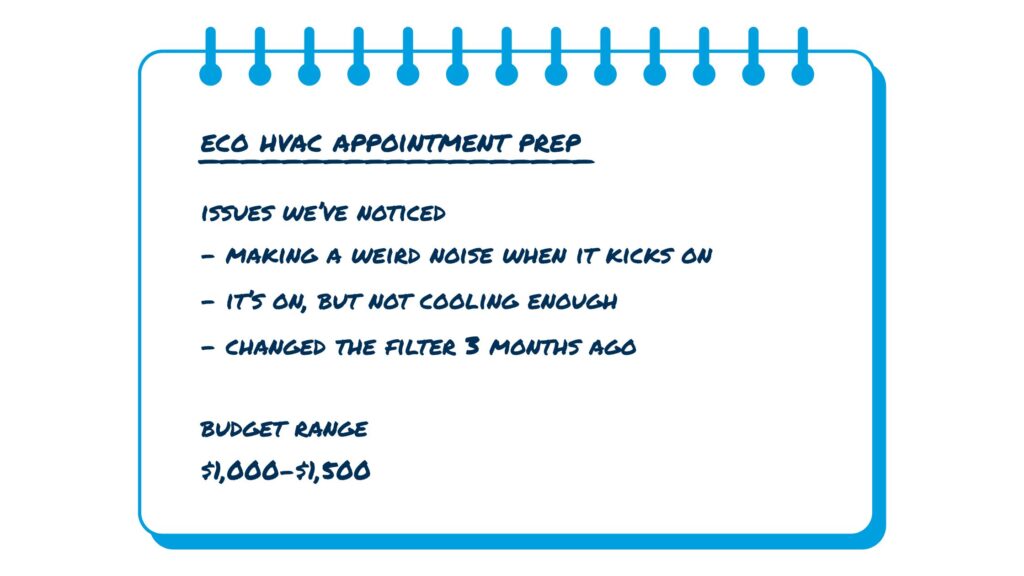
It can also be helpful to gather recent energy bills, make note of any past repairs or maintenance, and prepare any questions you want answered. The more information you provide, the more tailored your solution will be.
What Comes Next After Your Appointment?
Now, you have a clear understanding of what the process looks like—from the initial conversation and system inspection to diagnosis, recommendations, pricing, and next steps.
You’re no longer walking into your appointment blindly. You know what to expect and how each step helps ensure your home stays comfortable and efficient.
As you prepare for your appointment, your next step is to better understand your options, especially when it comes to repair versus replacement decisions.
At Eco Plumbers, Electricians, and HVAC Technicians, we’re committed to making every step of this process clear, honest, and tailored to your needs. Your next step is to read our guide on How to Decide Between Repairing or Replacing Your HVAC System so you can move forward with confidence.
FAQs
How long does a typical HVAC appointment take?
The length of an HVAC appointment depends on the purpose of the visit. Maintenance appointments usually take 60–90 minutes, while diagnostic or repair visits can vary depending on the issue. Installation consultations may take longer, especially if your technician needs to evaluate your home for proper system sizing. Emergency visits are typically focused on resolving the issue as quickly as possible.
Do I need to be home for the entire HVAC appointment?
Yes, it’s recommended that you’re home for the full appointment. Your technician may need access to different areas of your home, such as the thermostat, furnace, or outdoor unit. More importantly, being present allows you to ask questions, understand any issues, and make informed decisions on repairs or next steps.
Will the technician try to sell me a new system during my appointment?
A trustworthy HVAC technician should focus on diagnosing your system and presenting honest recommendations based on its condition. While replacement may be discussed if your system is older or failing, you should also be given repair options when appropriate. A good company will explain the pros and cons of each option so you can decide what’s best for your home and budget without pressure.